Fu-Go (ãµå·[å
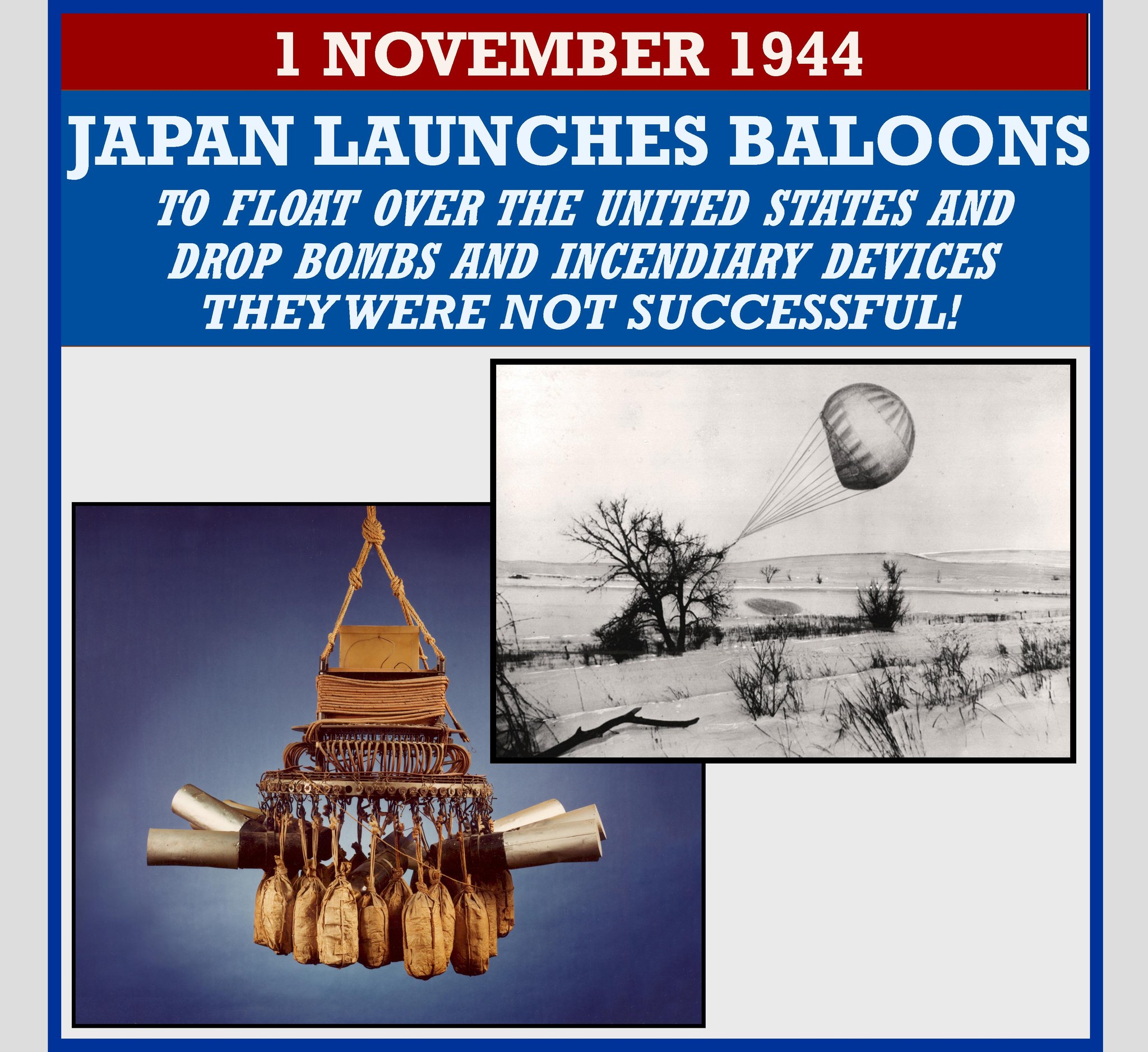
µå¨], fugÅ [heiki], lit. “Code Fu [Weapon]”) was an incendiary balloon weapon (風è¹çå¼¾, fÅ«sen bakudan, lit. “balloon bomb”) deployed by Japan against the United States during World War II. A hydrogen balloon measuring 33 ft in diameter, it carried a payload of two 11-pound incendiary devices plus one 33-pound anti-personnel bomb (or alternatively one 26-pound incendiary bomb). It made use of high-altitude and high-speed air currents over the Pacific Ocean (today known as the jet stream), and was intended to start large forest fires.
Between November 1944 and April 1945, the Japanese launched about 9,300 balloons from sites on Honshu, of which about 300 were found or observed in the U.S., with some in Canada and Mexico. Despite the high hopes of designers, who created a sophisticated ballast system to control altitude on the three-day flight, the balloon bombs were largely ineffective due to damp forest conditions and malfunctions, causing only six deaths (from a single civilian incident in Oregon) and minor damage.
MILITARY HISTORY SOCIETY OF ROCHESTER
ROCHESTERMILITARY.COM