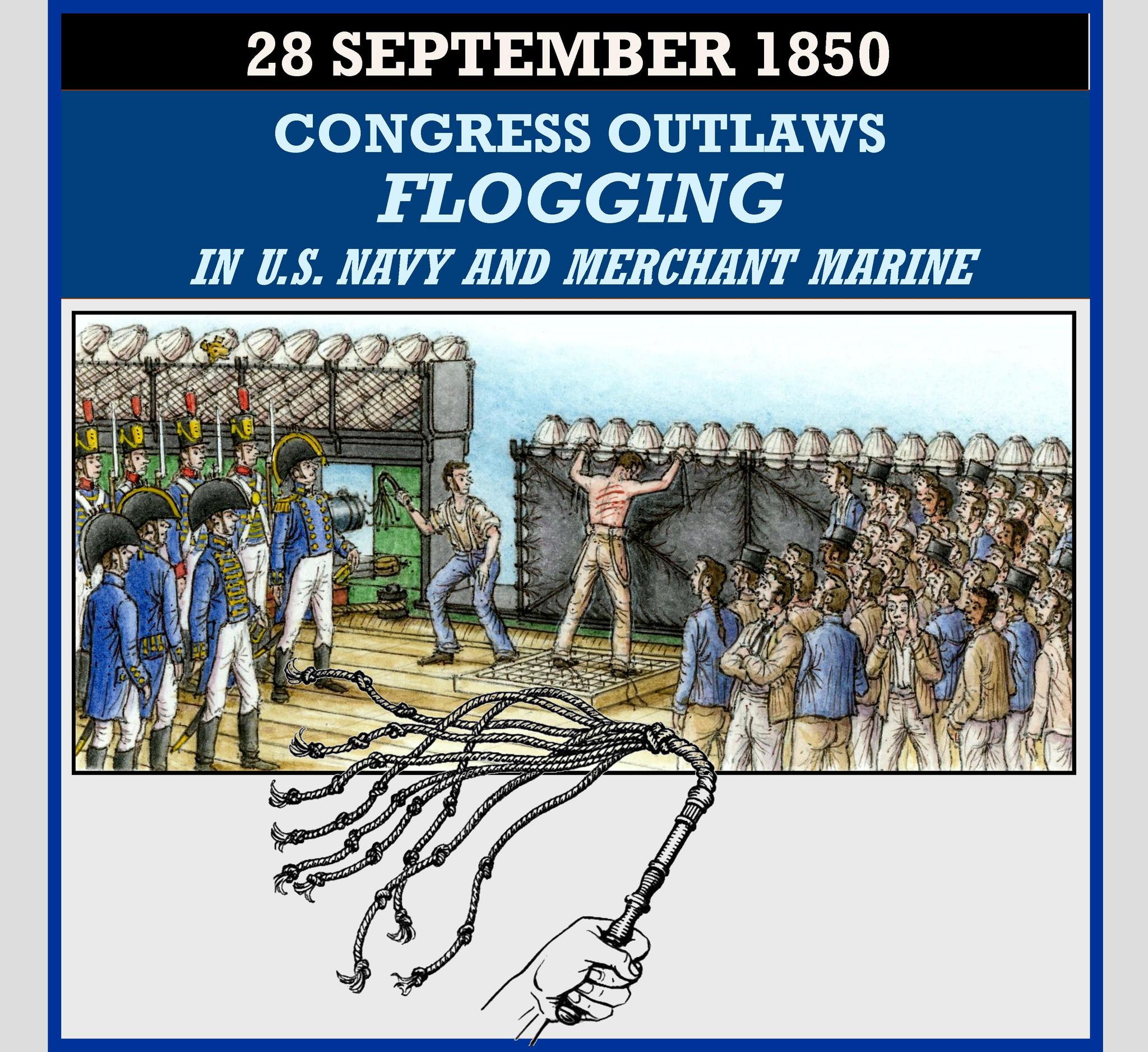
For centuries, flogging was an accepted form of corporeal punishment in military organizations and on merchant vessels. Flogging or flagellation is the act of methodically beating or whipping the human body. Instruments used in this process include rods, switches, whips, and the cat oâ nine tails. In the eighteenth century, soldiers in the US Army could receive up to 100 lashes if convicted of military offenses by a court-martial. In the British Army during this period, the maximum number of lashes was 1,200, although this was seldom imposed as it generally resulted in the death or permanent disablement of the accused. The offender was generally stripped to the waist and tied with his hands above his head, allowing the whip to more easily strike the sides, while avoiding harm to the arms. If available, a doctor or other medical person stood by to check the condition of the offender. Flogging was a public punishment, administered in front of the regiment in the army or in front of the shipâs crew in the navy or merchant service. Warnings against excessive use of flogging in the US Navy were published as early as 1797. A bill to abolish flogging was introduced in the House of Representatives in 1820, but failed. Secretary of the Navy Levi Woodbury, in 1831, directed that milder forms of correction should be utilized, rather than whipping, but he declined to prohibit its use at the commanding officerâs discretion. In 1840, Richard Henry Danaâs book Two Years before the Mast was published. The highly popular book included the description of a terrible flogging he witnessed on his merchant ship. This passage galvanized public opinion against the practice. On September 28, 1850, Congress enacted its annual Naval Appropriations Act. Included was a proviso stating: âThat flogging in the navy, and on board vessels of commerce, be, and the same is hereby, abolished from and after the passage of this act.â
MILITARY HISTORY SOCIETY OF ROCHESTER
ROCHESTERMILITARY.COM