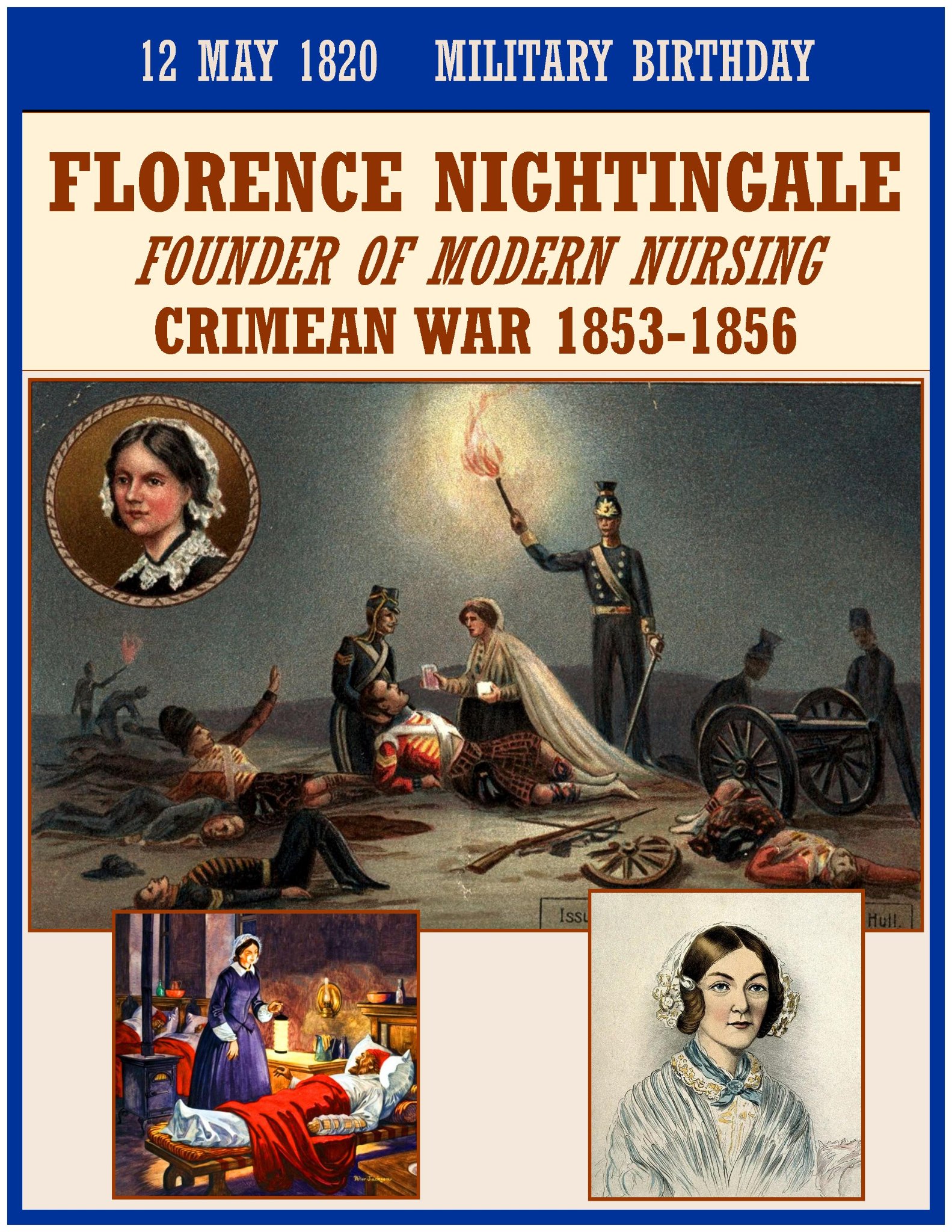
Florence Nightingale OM RRC DStJ (12 May 1820 â 13 August 1910) was an English social reformer, statistician and the founder of modern nursing. Nightingale came to prominence while serving as a manager and trainer of nurses during the Crimean War, in which she organised care for wounded soldiers at Constantinople. She gave nursing a favourable reputation and became an icon of Victorian culture, especially in the persona of “The Lady with the Lamp” making rounds of wounded soldiers at night.
Florence Nightingale’s most famous contribution came during the Crimean War, which became her central focus when reports got back to Britain about the horrific conditions for the wounded at the military hospital on the Asiatic side of the Bosporus, opposite Constantinople, at Scutari (modern-day Ãsküdar in Istanbul). Britain and France entered the war against Russia on the side of the Ottoman Empire. On 21 October 1854, she and the staff of 38 women volunteer nurses including her head nurse Eliza Roberts and her aunt Mai Smith, and 15 Catholic nuns (mobilized by Henry Edward Manning) were sent (under the authorisation of Sidney Herbert) to the Ottoman Empire. On the way, Nightingale was assisted in Paris by her friend Mary Clarke. The volunteer nurses worked about 339 mi away from the main British camp across the Black Sea at Balaklava, in the Crimea.
MILITARY HISTORY SOCIETY OF ROCHESTER
ROCHESTERMILITARY.COM