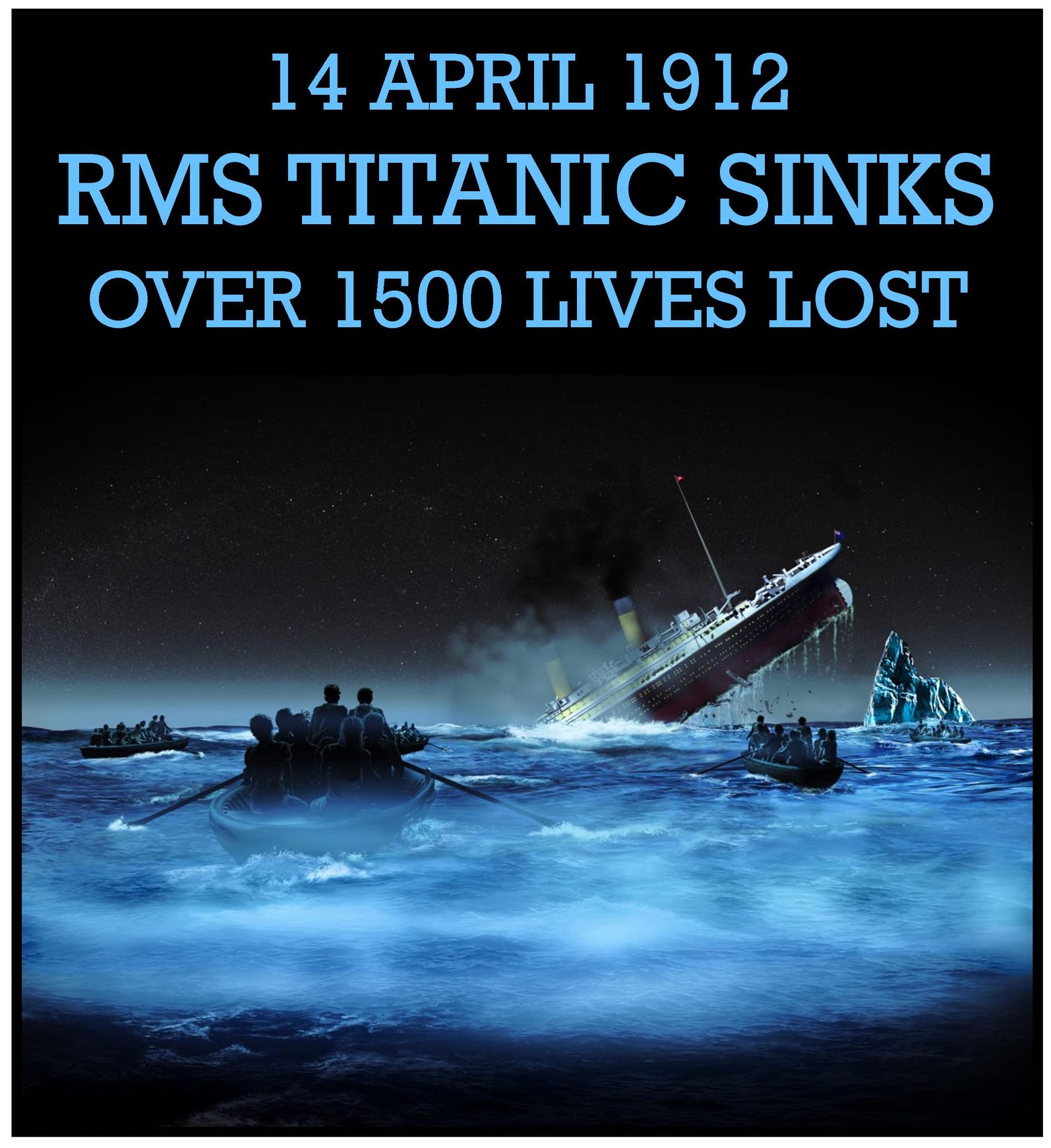
The RMS Titanic, a luxury steamship on her maiden voyage, sideswiped an iceberg at about 23:30 on April 14, 1912 and sank in the early hours of April 15 off the coast of Newfoundland in the North Atlantic. Of the 2,240 passengers and crew on board, more than 1,500 lost their lives in the disaster.
The Titanic was the product of intense competition among rival shipping lines in the first half of the 20th century. In particular, the White Star Line found itself in a battle for steamship primacy with Cunard, a venerable British firm with two standout ships that ranked among the most sophisticated and luxurious of their time.
Titanicâs departure from Southampton on April 10 was not without some oddities. A small coal fire was discovered in one of her bunkersâan alarming but not uncommon occurrence on steamships of the day. Stokers hosed down the smoldering coal and shoveled it aside to reach the base of the blaze.
On April 14, after four days of uneventful sailing, Titanic received sporadic reports of ice from other ships, but she was sailing on calm seas under a moonless, clear sky.
At about 11:30 p.m., a lookout saw an iceberg coming out of a slight haze dead ahead, then rang the warning bell and telephoned the bridge. The engines were quickly reversed and the ship was turned sharplyâinstead of making direct impact, Titanic seemed to graze along the side of the berg, sprinkling ice fragments on the forward deck. Sensing no collision, the lookouts were relieved. They had no idea that the iceberg had a jagged underwater spur, which slashed a 300-foot gash in the hull below the shipâs waterline. The Titanic was doomed!
MILITARY HISTORY SOCIETY OF ROCHESTER
ROCHESTERMILITARY.COM