The strategic bombing campaigns of World War II were defined by the synergy between airmen and their complex machines. Aboard a B-17 Flying Fortress, a ten-man crew operated as a single entity, their survival and the mission’s success hinging on specialized training, courage, and a vast array of technical equipment. Each artifact, from a simple gauge to a complex bombsight, tells a story of innovation and necessity in the hostile skies over enemy territory.
The Heart of the Mission: The Bombardier
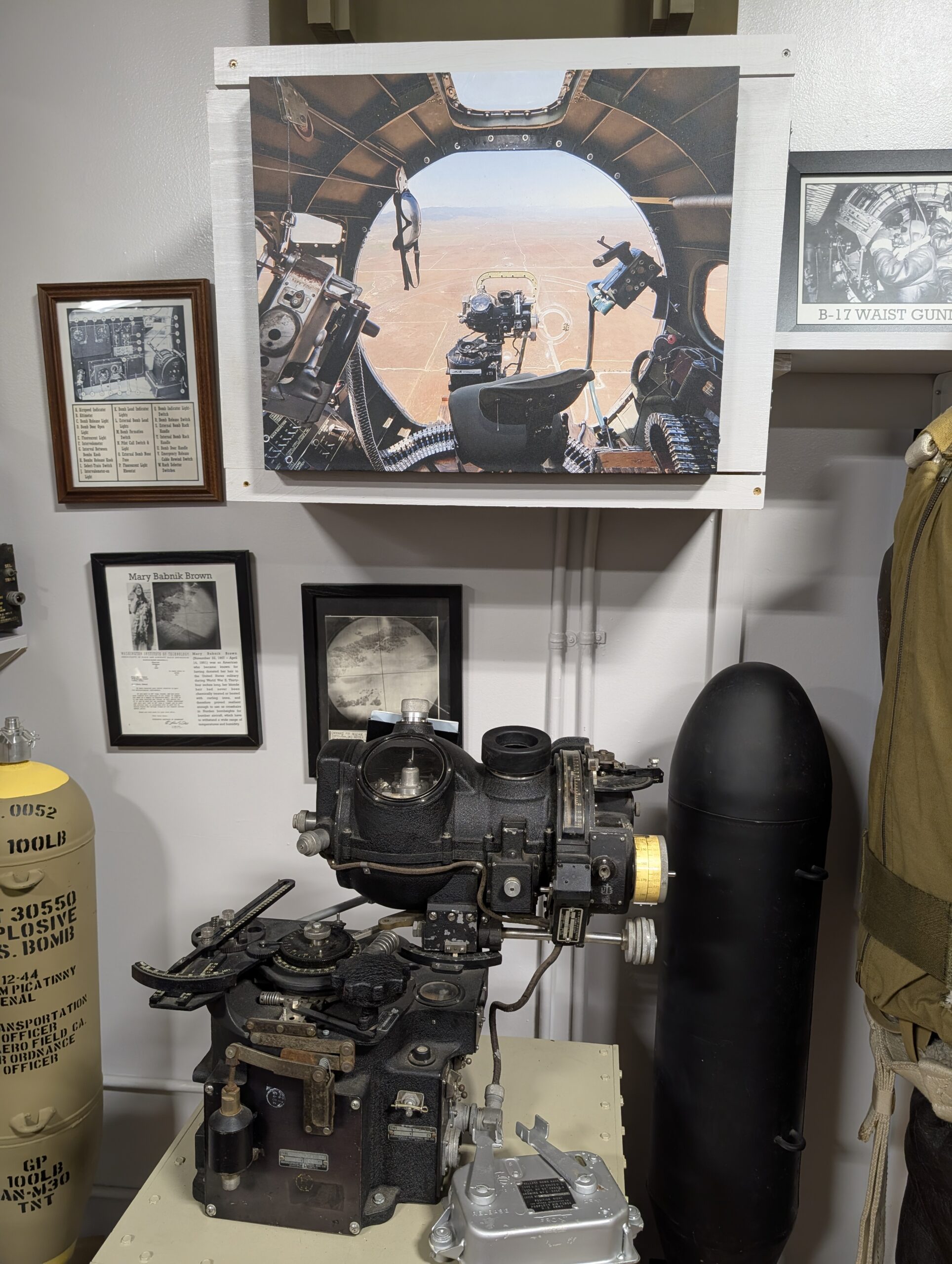
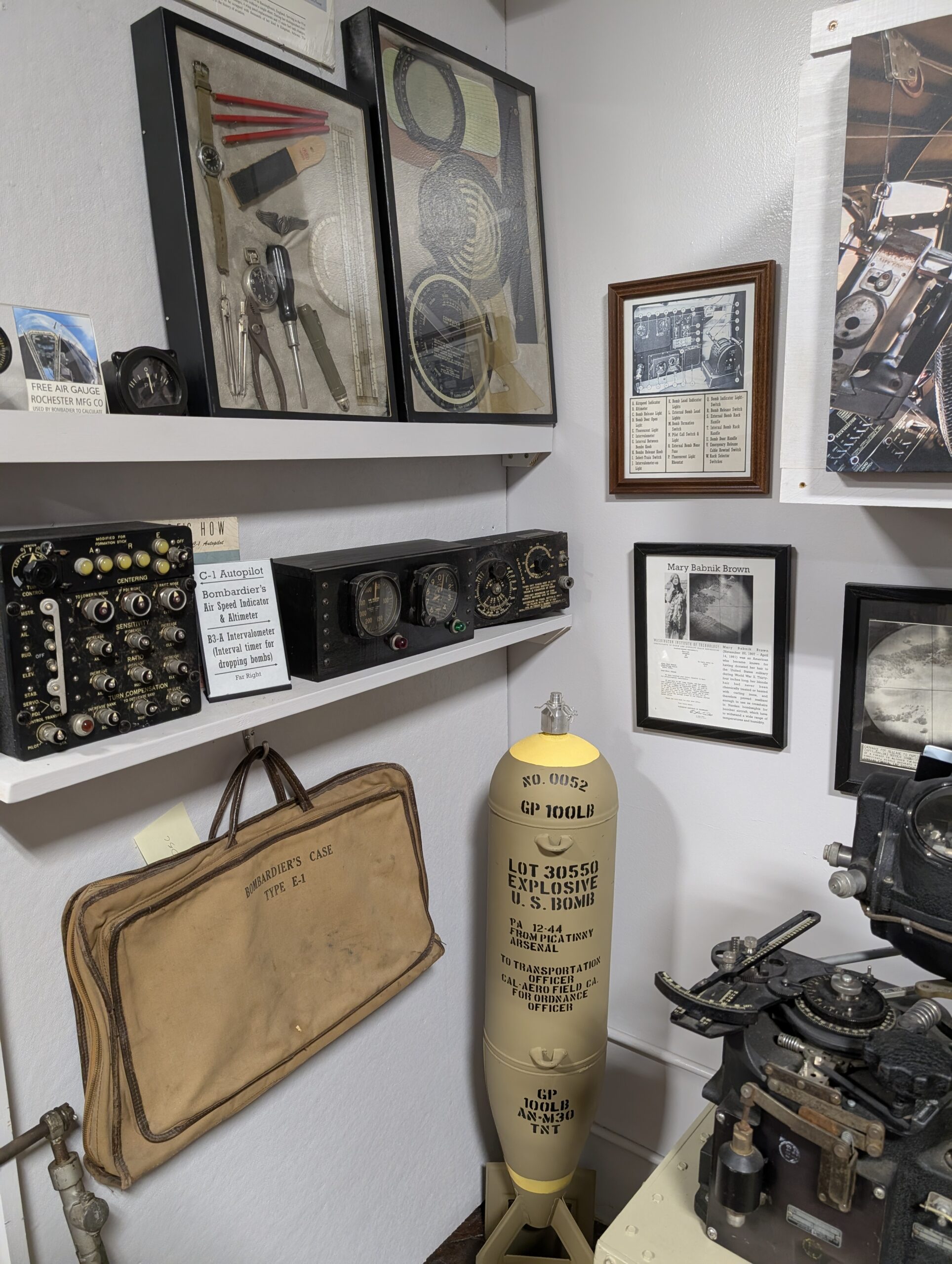
The primary offensive role belonged to the bombardier, a technician tasked with delivering ordnance accurately onto a target from five miles high. The centerpiece of their station was the legendary Norden M9 bombsight, a mechanical analog computer of remarkable complexity. Achieving a successful drop required more than just the bombsight; the bombardier had to factor in numerous variables. Instruments like the Free Air Gauge, manufactured by Rochester Manufacturing Company, provided critical outside air temperature data for calculating bomb trajectory.
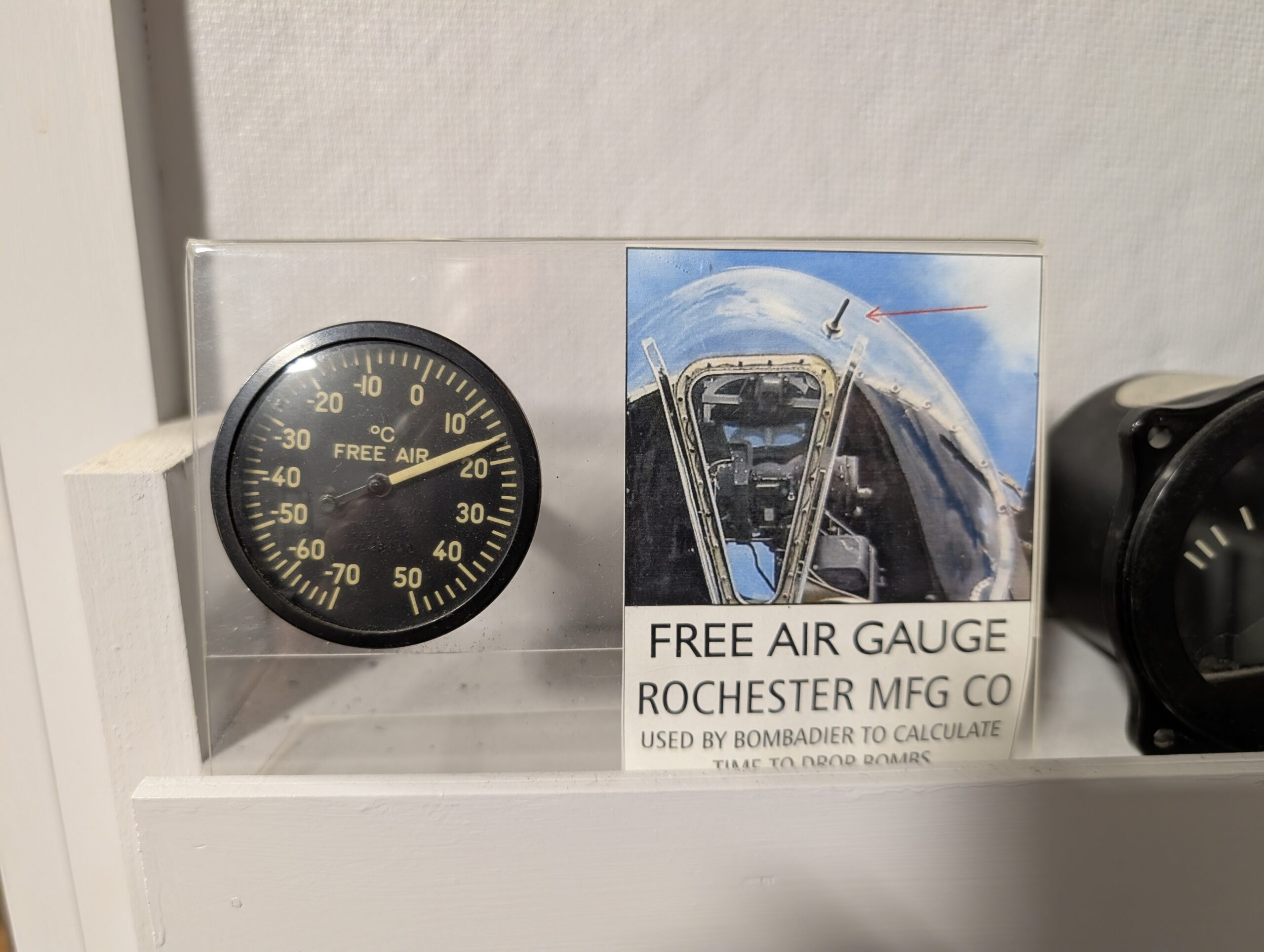
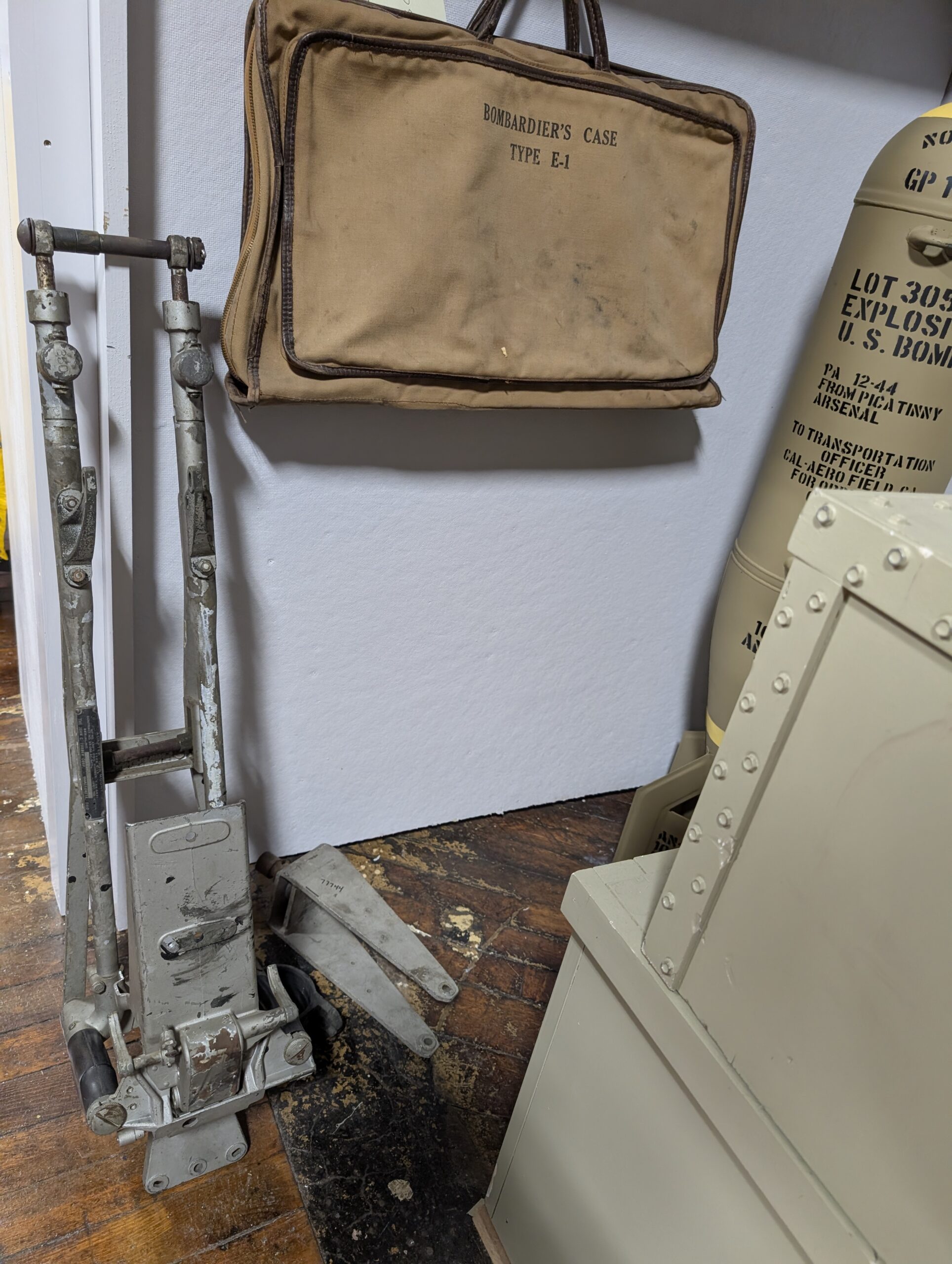
This data, along with altitude and airspeed, was manually entered into the Norden. The bombardier’s toolkit, often carried in a “Bombardier’s Case Type E-1,” included everything from navigation tools to control panels like the C-1 Autopilot and B3-A Intervalometer, which controlled the release sequence of bombs. The payload itself, such as the 100-pound AN-M30 General Purpose bomb, was the ultimate expression of the aircraft’s purpose. The stenciling on one such artifact, “PA 12-44,” indicates its manufacture at Picatinny Arsenal in December 1944, a silent testament to the industrial scale of the war effort.
The Flying Fortress’s Sting: The Gunners
While the bombardier focused on the target, the rest of the crew was engaged in a constant battle for survival against enemy fighters. The B-17 earned its “Flying Fortress” nickname from its heavy defensive armament, primarily consisting of Browning AN/M2 .50 caliber machine guns manned by dedicated gunners.
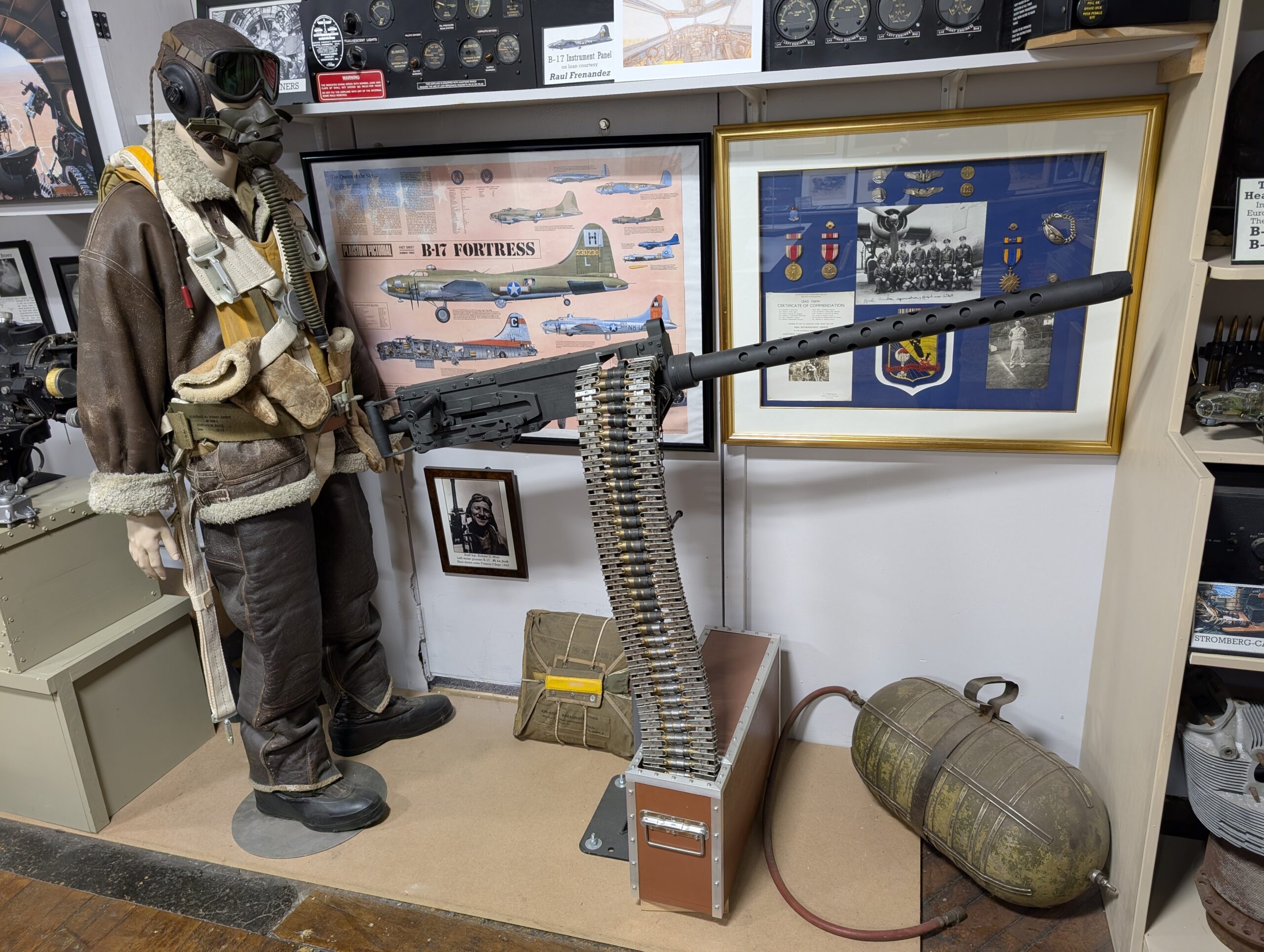
A waist gunner, for example, was outfitted for the brutal conditions of his exposed position. The ensemble included a Type B-3 shearling jacket for warmth against sub-zero temperatures, a leather flight helmet with goggles, and an A-14 oxygen mask to remain conscious at high altitude. A safety harness was essential to prevent a gunner from falling out of the open waist window during violent evasive maneuvers.
Life Support at 25,000 Feet
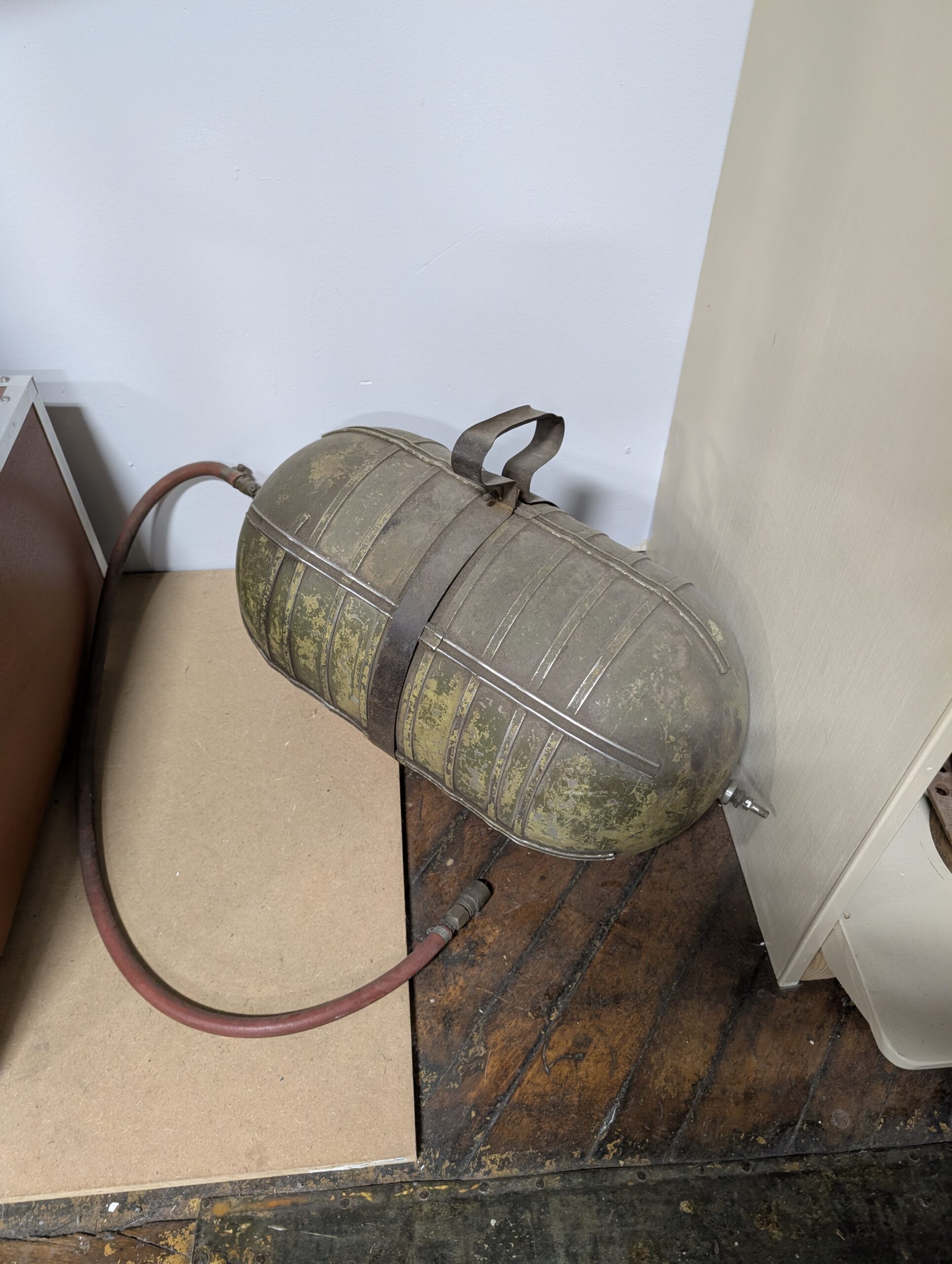
Life above 10,000 feet required constant supplemental oxygen. While each crewman had a fixed station, mobility was crucial. The Type A-4 portable oxygen cylinder, or “walk-around bottle,” provided a limited supply of oxygen, allowing gunners and other crewmen to move about the aircraft to clear gun jams or assist wounded comrades. In addition to the environmental hazards, there was the constant threat of anti-aircraft flak and cannon shells from interceptors. To counter this, aircrews wore heavy flak vests and steel M3 or M4A2 flak helmets over their leather flight helmets, adding layers of protection for the head and torso.
Command and Control
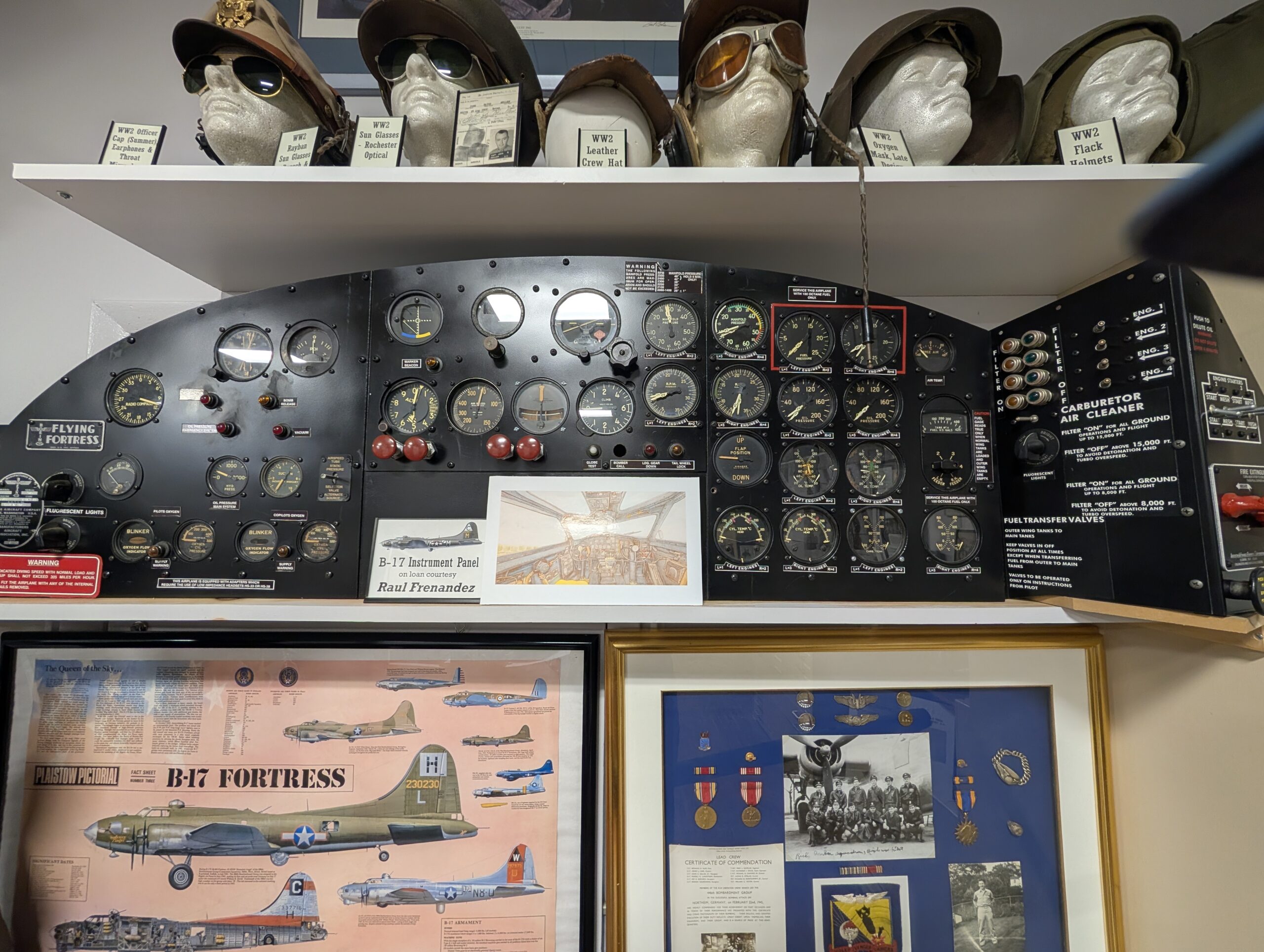
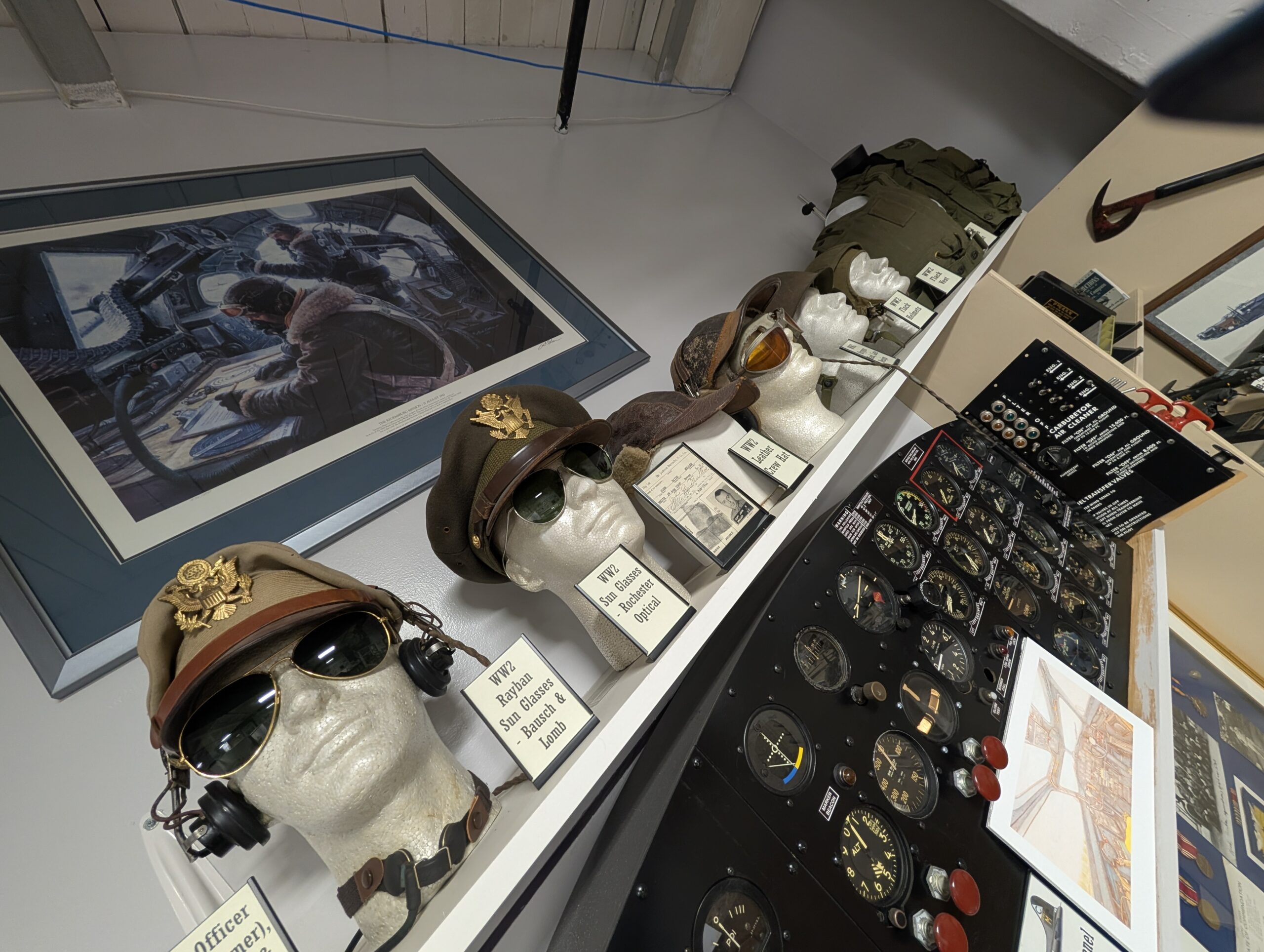
The entire operation was orchestrated from the cockpit by the pilot and co-pilot, who navigated the aircraft using a dizzying array of dials and gauges on the main instrument panel. These instruments provided constant feedback on engine performance, fuel status, and flight attitude, allowing the pilots to guide the heavily laden bomber through hostile skies. The officer’s caps and aviator headsets seen in museum displays represent the leadership and communication that were essential to coordinating the crew’s ten distinct roles. Each individual, from the pilot in command to the gunner in the tail, relied on their equipment and each other to see the mission through and, hopefully, return home.