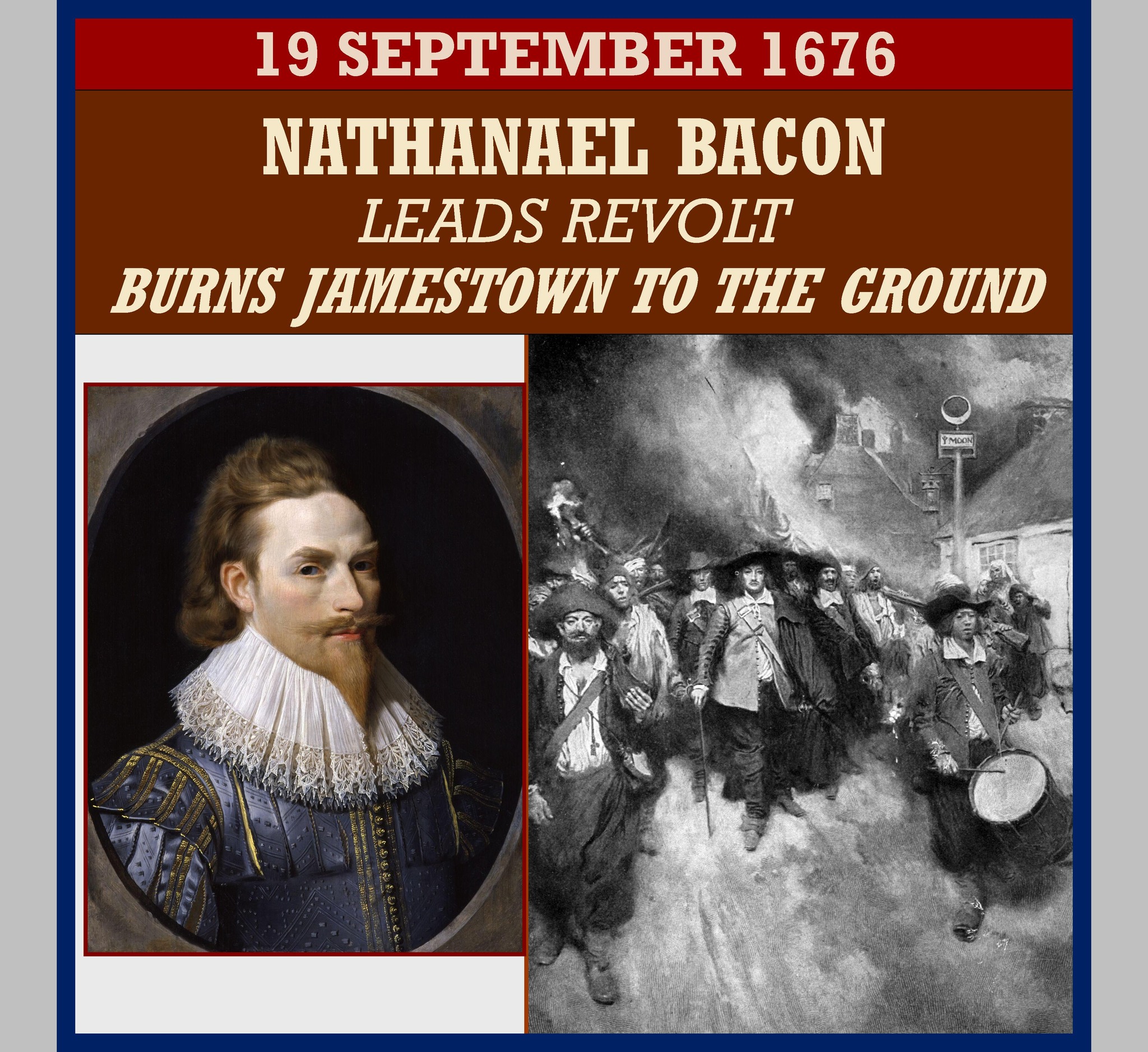
Baconâs Rebellion, fought from 1676 to 1677, began with a local dispute with the Doeg Indians on the Potomac River. Chased north by Virginia militiamen, who also attacked the otherwise uninvolved Susquehannocks, the Indians began raiding the Virginia frontier. The governor, Sir William Berkeley, persauded the General Assembly to adopt a plan that isolated the Susquehannocks while bringing in Indian allies on Virginiaâs side. Others saw in the Susquehannock War an opportunity for a general Indian war that would yield Indian slaves and lands, and would give vent to popular anti-Indian sentiment. They found a leader in Nathaniel Bacon, a recent arrival to Virginia and a member of the governorâs Council. Bacon demanded a commission to fight the Indians; when none was forthcoming, he led âvolunteersâ against some of Virginiaâs closest Indian allies. This led to a civil war pitting Baconâs followers against Berkeley loyalists. The conflict was often bitter and personalâat one point, Berkeley bared his chest and dared Bacon to kill himâand involved the looting of both rebel and loyalist properties. Berkeley expelled Bacon from the Council, reinstated him, and then expelled him a second time. After the governor fled Jamestown for the Eastern Shore, he returned, only to be chased away by Baconâs army, which burned the capital. Bacon died suddenly in October 1676, but bitter fighting continued into January. The Crown dispatched troops to Virginia, which arrived shortly after the rebellion had been quelled. The causes of Baconâs Rebellion have long been disputed. Today it is generally regarded as part of a general crisis in Virginiaâs social, economic, and political arrangements. The argument that it should be seen as a revolt against English tyranny and a precursor to the American Revolution (1775â1783) has been discredited.
MILITARY HISTORY SCOIETY OF ROCHESTER
ROCHESTERMILITARY.COM