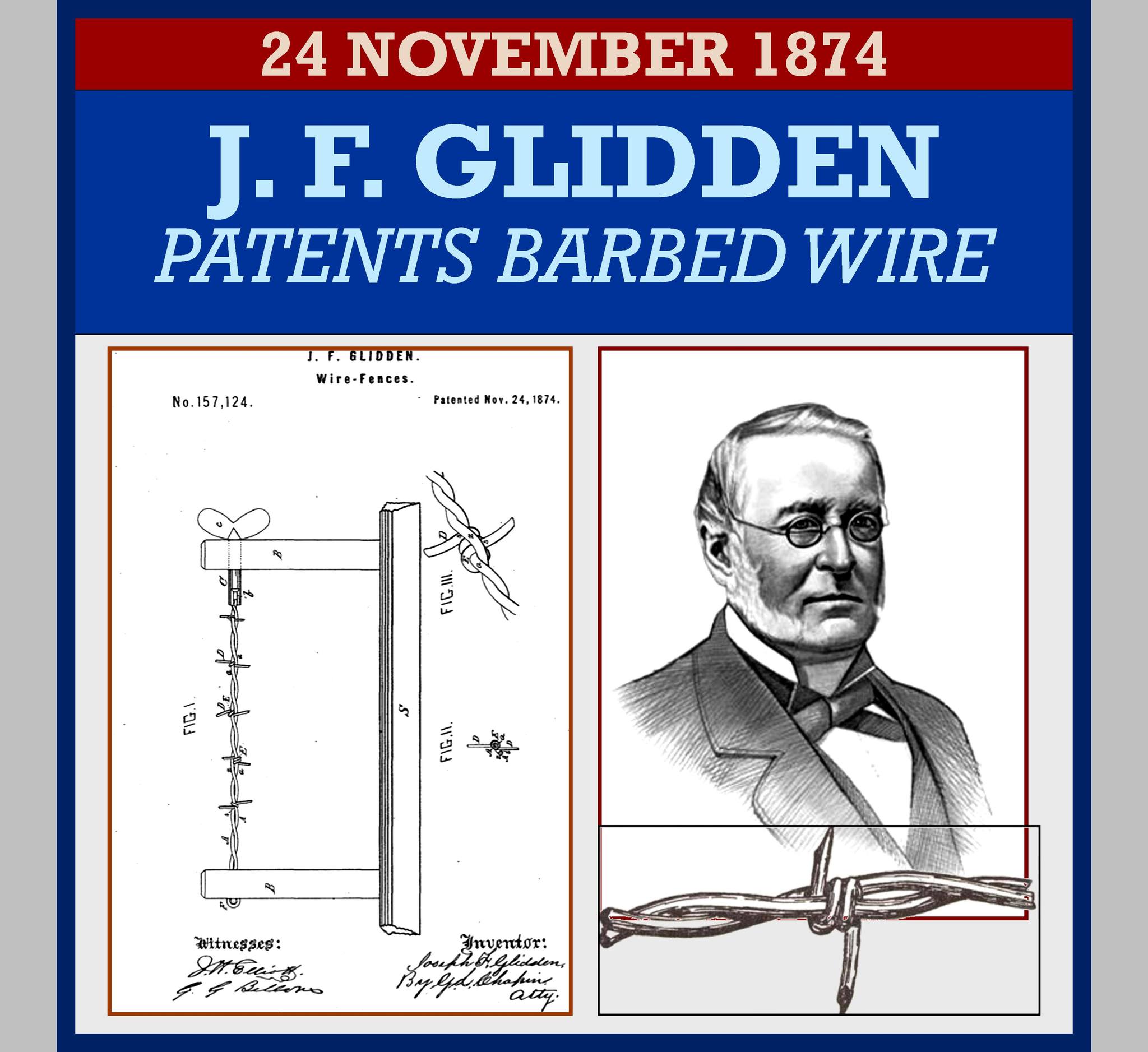
Barbed wire, also known as barb wire, is a type of steel fencing wire constructed with sharp edges or points arranged at intervals along the strands. It is used to construct inexpensive fences and is used atop walls surrounding secured property. It is also a major feature of the fortifications in trench warfare (as a wire obstacle).
A person or animal trying to pass through or over barbed wire will suffer discomfort and possibly injury. Barbed wire fencing requires only fence posts, wire, and fixing devices such as staples. It is simple to construct and quick to erect, even by an unskilled person.
The first patent in the United States for barbed wire was issued in 1867 to Lucien B. Smith of Kent, Ohio, who is regarded as the inventor. Joseph F. Glidden of DeKalb, Illinois, received a patent for the modern invention in 1874 after he made his own modifications to previous versions.
Barbed wire was the first wire technology capable of restraining cattle. Wire fences are cheaper and easier to erect than their alternatives (one such alternative is Osage orange, a thorny bush that is time-consuming to transplant and grow). When wire fences became widely available in the United States in the late 19th century, it became more affordable to fence much larger areas than before, and intensive animal husbandry was made practical on a much larger scale.
MILITARY HISTORY SOCIETY OF ROCHESTER
ROCHESTERMILITARY.COM