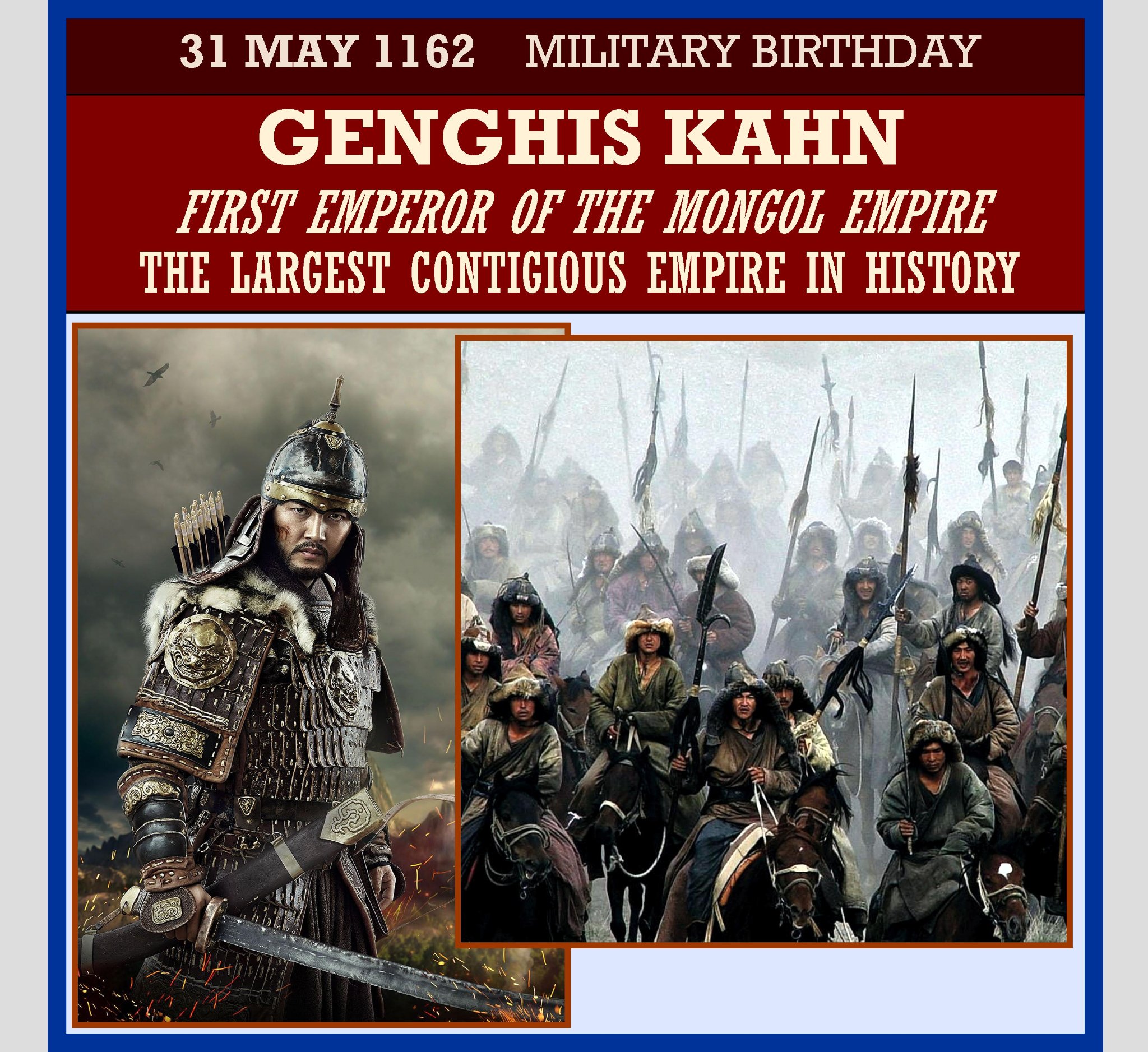
Genghis Khan (born Temüjin; (May 31, 1162 â August 25, 1227) was the founder and first Great Khan (Emperor) of the Mongol Empire, which became the largest contiguous empire in history after his death. He came to power by uniting many of the nomadic tribes of the Mongol steppe and being proclaimed the universal ruler of the Mongols, or Genghis Khan. With the tribes of Northeast Asia largely under his control, he set in motion the Mongol invasions, which ultimately witnessed the conquest of much of Eurasia, and incursions by Mongol raiding parties as far west as Legnica in western Poland and as far south as Gaza. During his life, he launched campaigns against the Qara Khitai, Khwarezmia, the Western Xia and Jin dyansty, while his generals raided into medieval Georgia, Circassia, the Kievan Rus’, and Volga Bulgaria.
Due to his exceptional military successes, Genghis Khan is often considered to be one of the greatest conquerors of all time, and by the end of the Great Khan’s life, the Mongol Empire occupied a substantial portion of Central Asia and China. Genghis Khan and his story of conquest have a fearsome reputation in local histories.
MILITARY HISTORY SOCIETY OF ROCHESTER
ROCHESTERMILITARY.COM