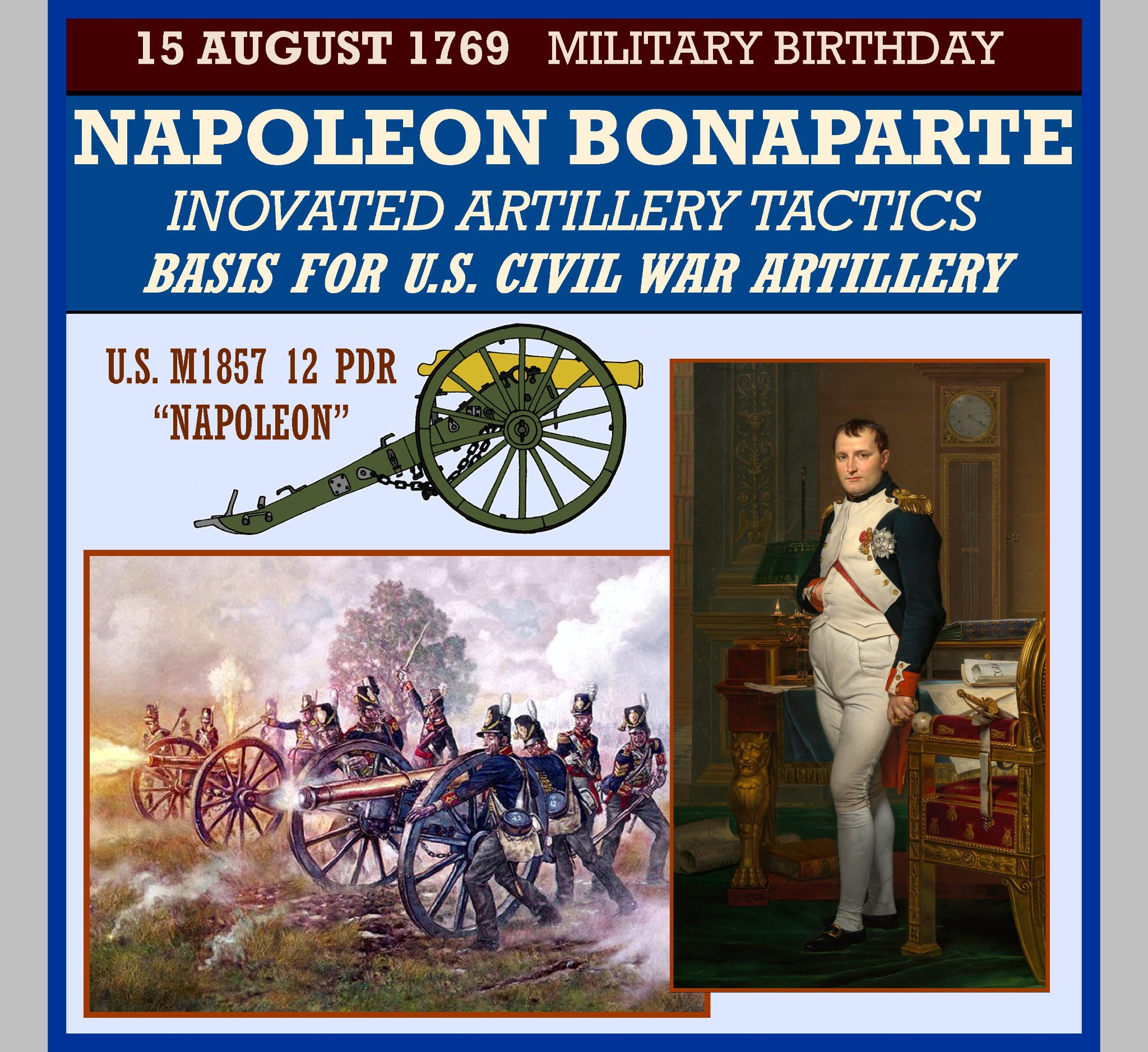
Napoleon, also Napoleon Bonaparte (born NapoleoneBuonaparte; 15 August 1769 â 5 May 1821), and later known by his regal name Napoleon I, was a French military and political leader who rose to prominence during the French Revolution and led several successful campaigns during the Revolutionary Wars. He was the de facto leader of the French Republic as First Consul from 1799 to 1804. As Napoleon I, he was Emperor of the French from 1804 until 1814 and again in 1815. Napoleon’s political and cultural legacy has endured, and he has been one of the most celebrated and controversial leaders in world history.
Napoleon changed artillery – an often quoted sentiment is that of Wellington at Waterloo – “He is moving his guns around like they were a pair of pistols!” Sweden had invented light field artillery but Napoleon brought its usage to a new level. Napoleon, who was above all an artillery officer, owed his first successes to this weapon. It was thanks to the talents of his gunners that he took Toulon in 1793 and that he began to make a name. It was with cannons that he faced the Royalist revolt against the Directory and gained the nickname “General Vendémiaire”. Once in power, Napoleon was therefore the most able to know how to intelligently reform this weapon from which he is born and which he knows perfectly well, having held all the posts, from simple gunner (as part of his training at the military School of Paris) to general. In 1803, when Napoleon became the first Consul, he decided to simplify the Gribeauval system further by limiting the number of calibers used. The goal is simple, always more standardize to always improve repairs and supply.
The U.S, Model 1857 âNapoleonâ, 12 pounder smooth bore cannon was named after him.
MILITARY HSITORY SOCIETY OF ROCHESTER
ROCHESTERMILITARY.COM