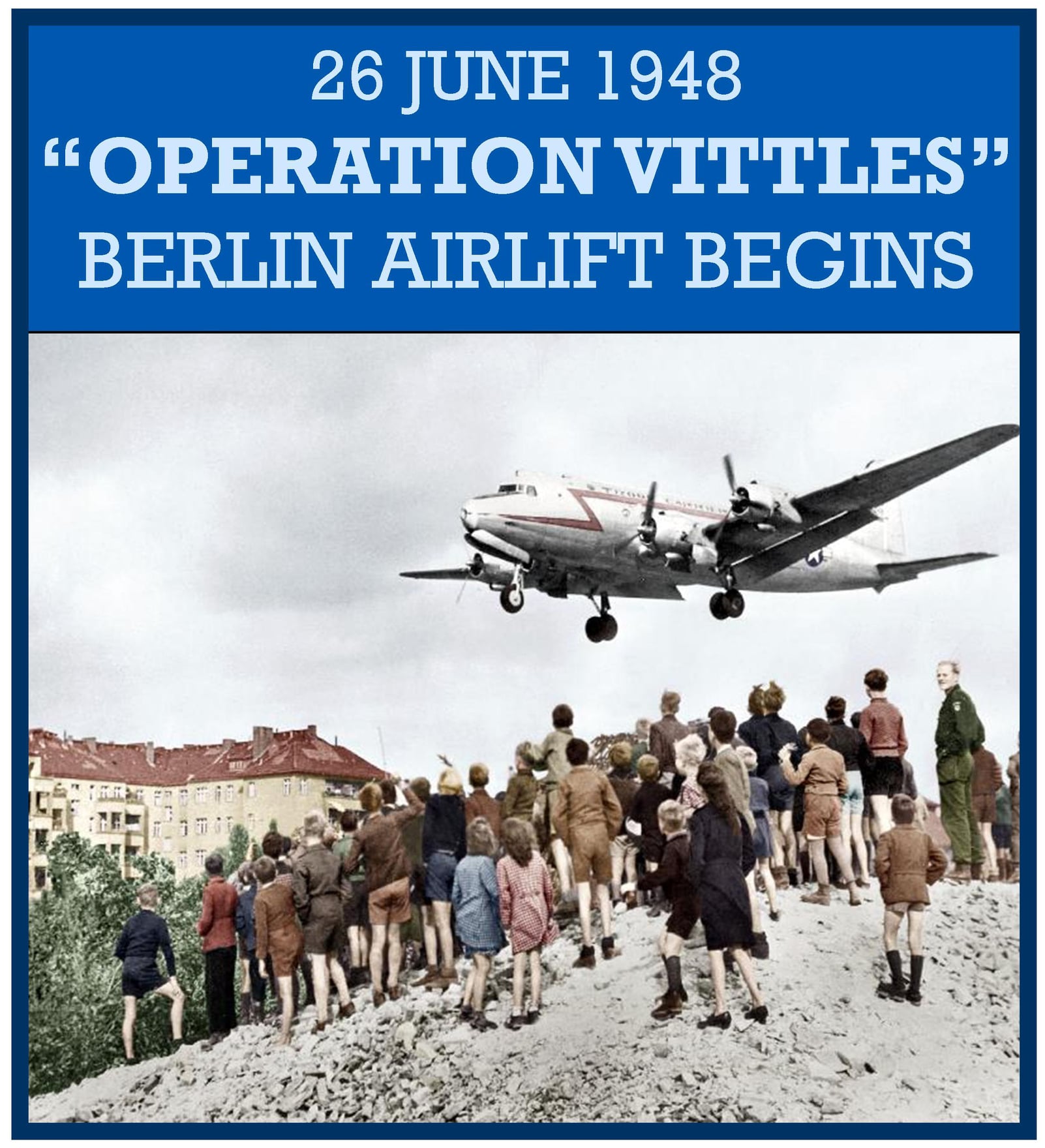
On June 24, 1948, Soviet forces blockaded all road, rail and water routes into Berlinâs Allied-controlled areas, stifling the vital flow of food, coal and other supplies. Soviet troop numbers dwarfed those of the Allies, which had drawn down after the war, so there was little the Allies could do about it militarily.
But the Soviets couldnât block Allied airspace, so U.S. and UK forces took to the skies to get supplies to the Allied sectors. On June 26, the U.S. launched Operation Vittles, which the U.K. later joined. It was the biggest aerial resupply mission ever embarked upon. The Allies also imposed their own counter-blockade, restricting trade with East Germany and East Berlin.
The airlift was a daunting task at first. More than 2 million Berliners were relying on the aid, which included much-needed food, fuel and medicine. Over time, though, it became more efficient, and the number of airdrops increased. At one point, Air Force and Navy planes were landing at Tempelhof Airport every 45 seconds.
On Easter Sunday, April 17, 1949, the constant procession of planes managed to deliver 13,000 tons of cargo, including the equivalent of 600 railroad cars of coal â all in one day!
During the entire airlift, the U.S. and U.K. delivered more than 2.3 million tons of food, fuel and supplies to West Berlin via more than 278,000 airdrops. American aircrews made more than 189,000 flights, totaling nearly 600,000 flying hours and exceeding 92 million miles.
MILITARY HISTORY SOCIETY OF ROCHESTER
ROCHESTERMILITARY.COM