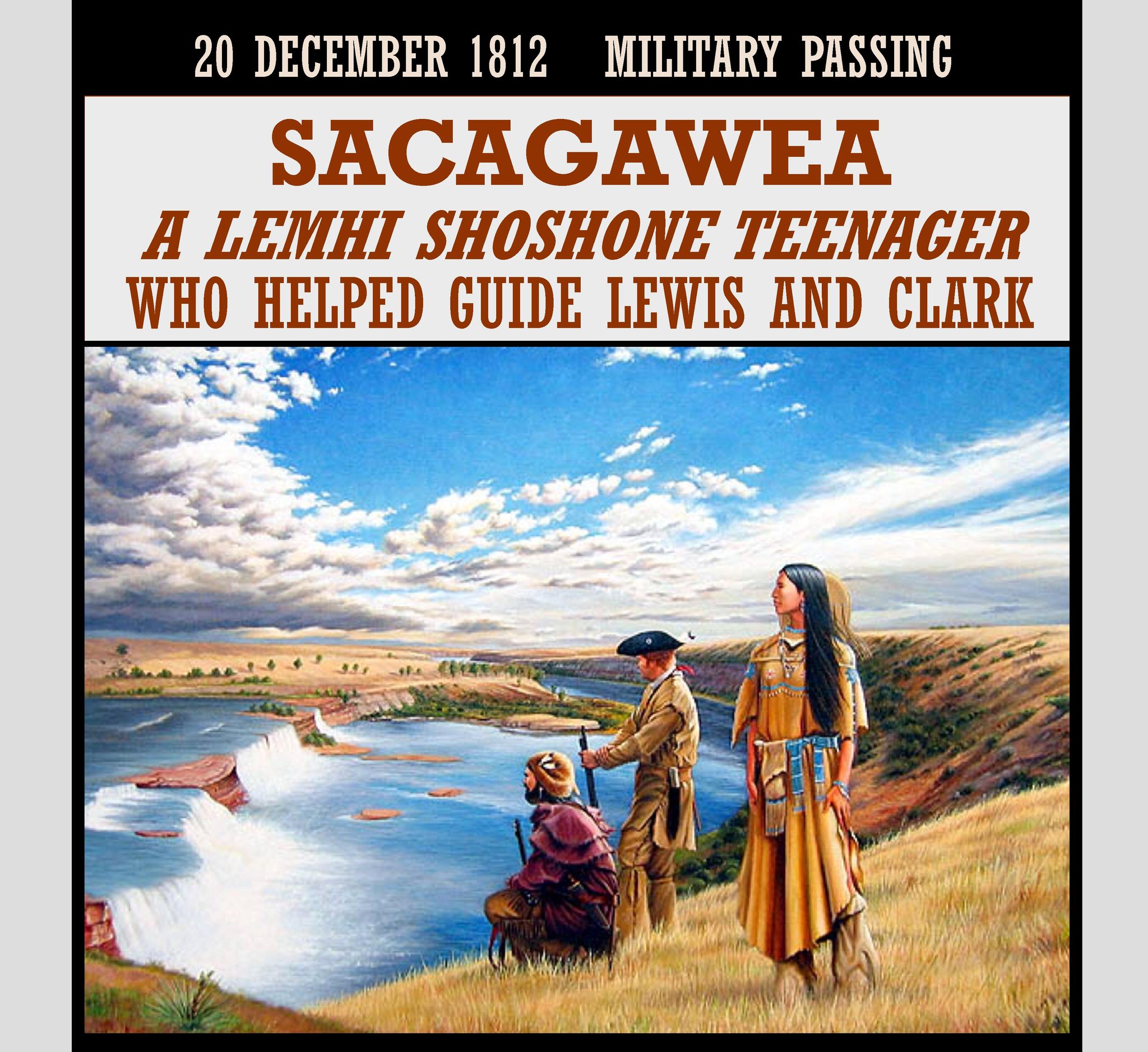
Sacagawea (/ËsækÉdÊÉËwiËÉ/ sack-uh-juh-WE-uh or /sÉËkÉËÉ¡ÉËweɪÉ/ suh-COG-uh-way-uh;[ also spelled Sakakawea or Sacajawea; May c. 1788 â December 20, 1812) was a Lemhi Shoshone woman who, in her teens, helped the Lewis and Clark Expedition (1804-1806) in achieving their chartered mission objectives by exploring the Louisiana Territory. Sacagawea traveled with the expedition thousands of miles from North Dakota to the Pacific Ocean, helping to establish cultural contacts with Native American people and contributing to the expedition’s knowledge of natural history in different regions.
In 1804, the Corps of Discovery reached a Mandan village, where Captains Meriwether Lewis and William Clark built Fort Mandan for wintering over in 1804â05. They interviewed several trappers who might be able to interpret or guide the expedition up the Missouri River in the springtime. Knowing they would need to communicate with the tribal nations who lived at the headwaters of the Missouri, they agreed to hire Toussaint Charbonneau, who claimed to speak several Native languages, and one of his wives, who spoke Shoshone. Sacajawea was pregnant with her first child at the time.
The National American Woman Suffrage Association of the early 20th century adopted her as a symbol of women’s worth and independence, erecting several statues and plaques in her memory, and doing much to recount her accomplishments.
MILITARY HISTORY SOCIETY OF ROCHESTER
ROCHESTERMILITARY.COM