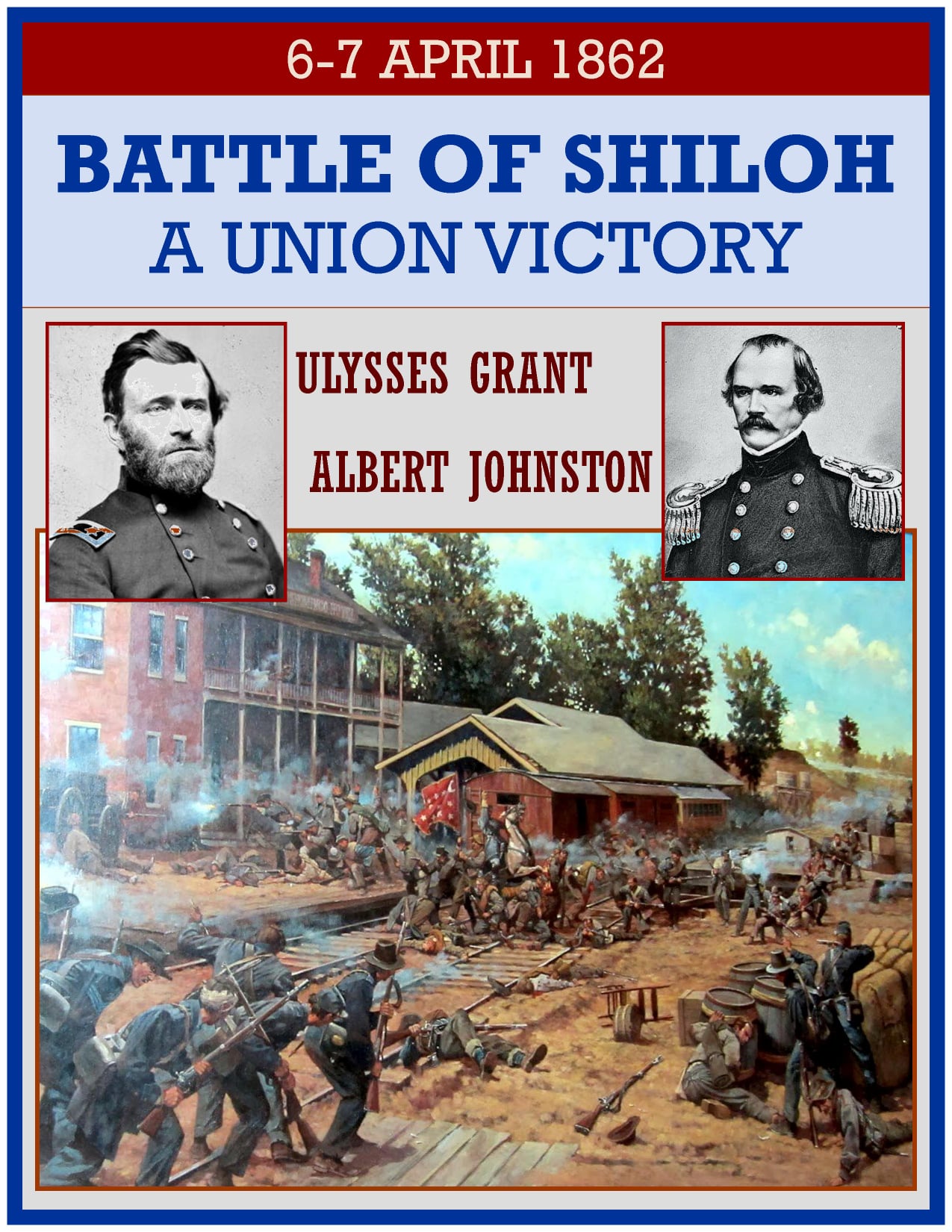
The Battle of Shiloh (also known as the Battle of Pittsburg Landing) was an early battle in the Western Theater of the American Civil War, fought April 6â7, 1862, in southwestern Tennessee. The Union Army of the Tennessee (Major General Ulysses S. Grant) had moved via the Tennessee River deep into Tennessee and was encamped principally at Pittsburg Landing on the west bank of the Tennessee River, where the Confederate Army of Mississippi (General Albert Sidney Johnston, P. G. T. Beauregard second-in-command) launched a surprise attack on Grant’s army from its base in Corinth, Mississippi. Johnston was mortally wounded during the fighting; Beauregard took command of the army and decided against pressing the attack late in the evening. Overnight, Grant was reinforced by one of his divisions stationed farther north and was joined by three divisions from the Army of the Ohio (Maj. Gen. Don Carlos Buell). The Union forces began an unexpected counterattack the next morning which reversed the Confederate gains of the previous day.
The battle was a Union victory. The Southâs defeat at Shiloh ended the Confederacyâs hopes of blocking the Union advance into Mississippi and doomed the Confederate military initiative in the West. With the loss of their commander, Gen. Albert Sidney Johnston, in battle, Confederate morale plummeted.
The cost of the victory was high. More than 13,000 of Grantâs and Buellâs approximately 62,000 troops were killed, wounded, captured or missing. Of 45,000 Confederates engaged, there were more than 10,000 casualties. The more than 23,000 combined casualties were far greater than the casualty figures for the warâs other key battles.
MILITARY HISTORY SOCIETY OF ROCHESTER
ROCHESTERMILITARY.COM