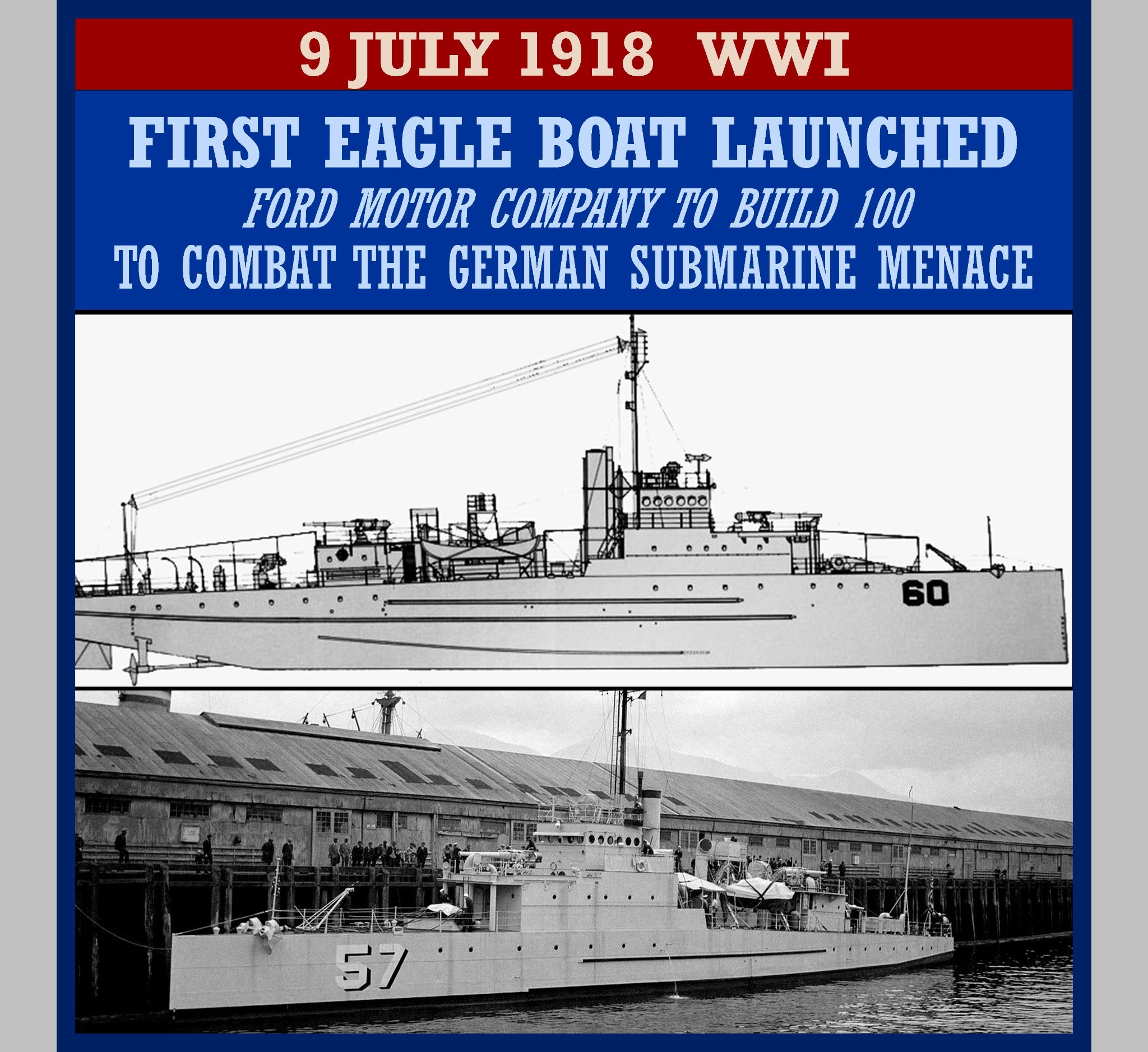
The Eagle-class patrol craft were a set of steel ships smaller than contemporary destroyers but having a greater operational radius than the wooden-hulled, 110-foot submarine chasers developed in 1917. The submarine chasers’ range of about 900 miles at a cruising speed of 10 knots (12 mph) restricted their operations to off-shore anti-submarine work and denied them an open-ocean escort capability; their high consumption of gasoline and limited fuel storage were handicaps the Eagle class sought to remedy.
In June 1917, President of the United States Woodrow Wilson had summoned auto-builder Henry Ford to Washington in the hope of getting him to serve on the United States Shipping Board. Wilson felt that Ford, with his knowledge of mass production techniques, could immensely speed the building of ships in quantity. Apprised of the need for antisubmarine vessels to combat the U-boat menace, Ford replied, “what we want is one type of ship in large numbers.
No facilities were available at the Navy yards for building new craft and Ford was asked if he would undertake the task. Ford agreed, and, in January 1918, he was directed to proceed with the building of 100 of them. Later on, 12 more were added for delivery to the Italian government.
MILITARY HISTORY SOCIETY OF ROCHESTER
ROCHESTERMILITARY.COM