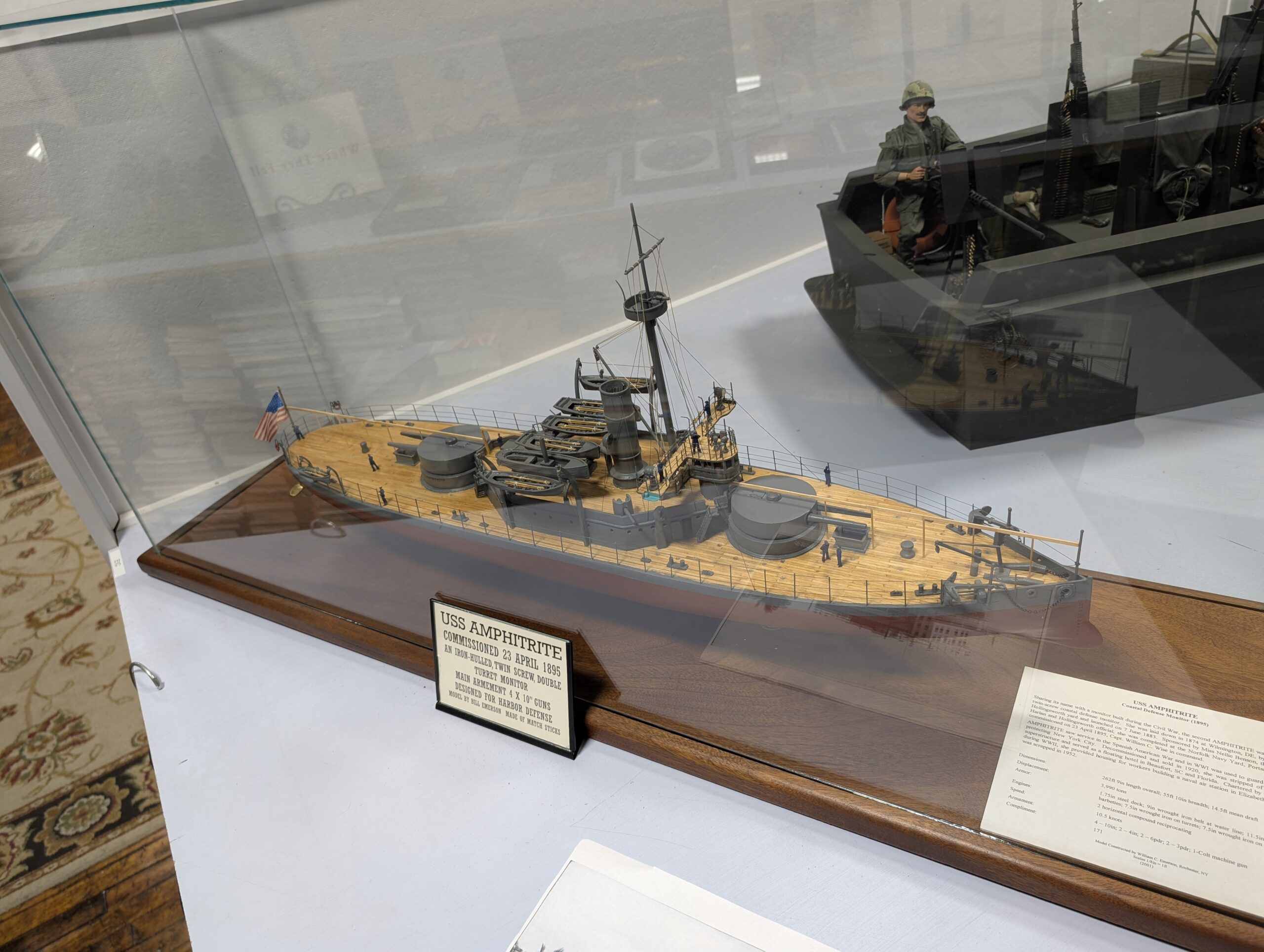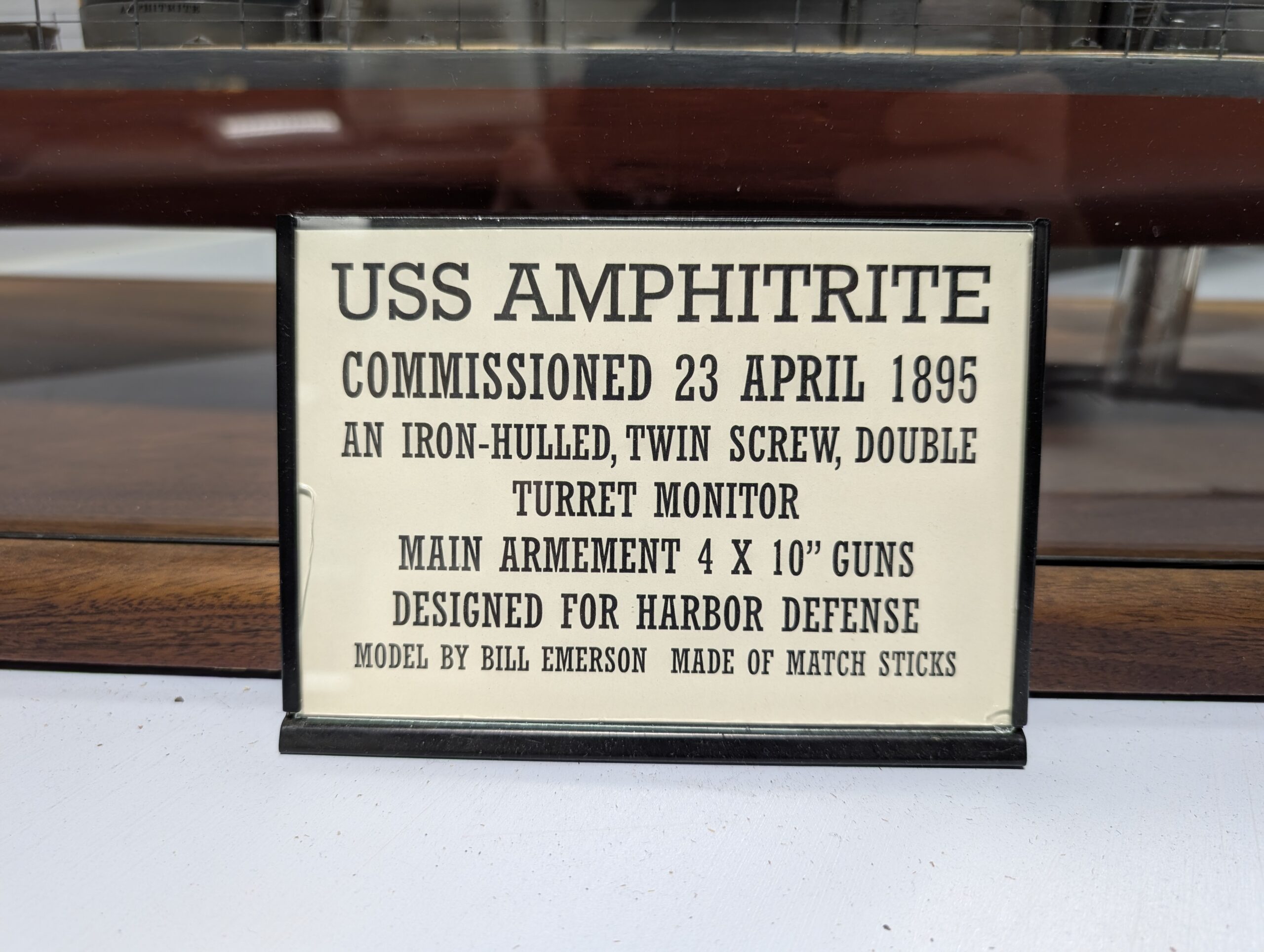
Guardians of the Coast
In the final decades of the 19th century, the United States Navy underwent a significant transformation, moving from a post-Civil War fleet of aging wooden ships to a modern force of steel. A key component of this “New Navy” was a specialized class of vessel designed for harbor defense: the coastal monitor. Descended from their famous Civil War ancestors, ships of the Amphitrite-class were floating fortresses, built to protect America’s burgeoning port cities.
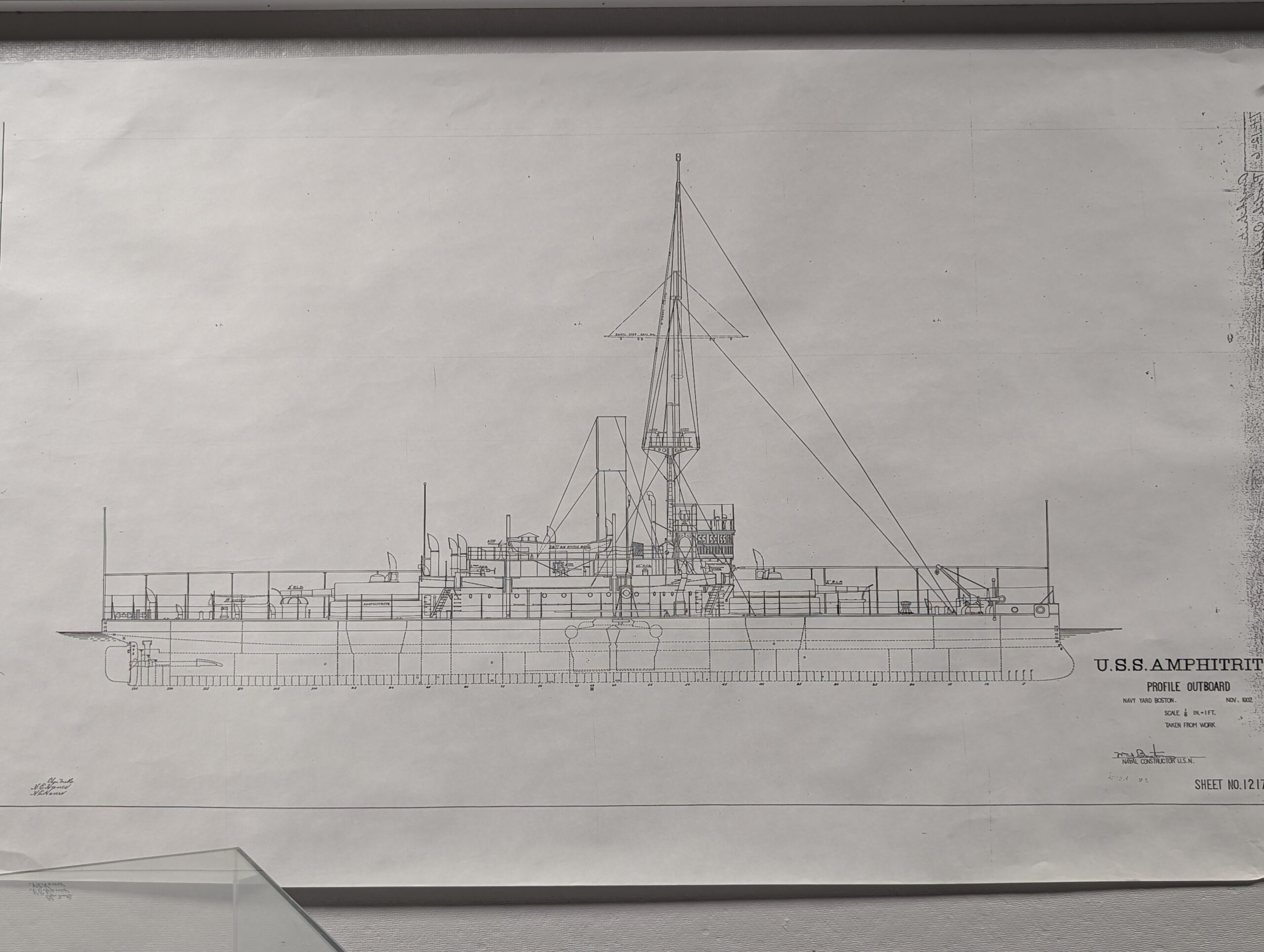
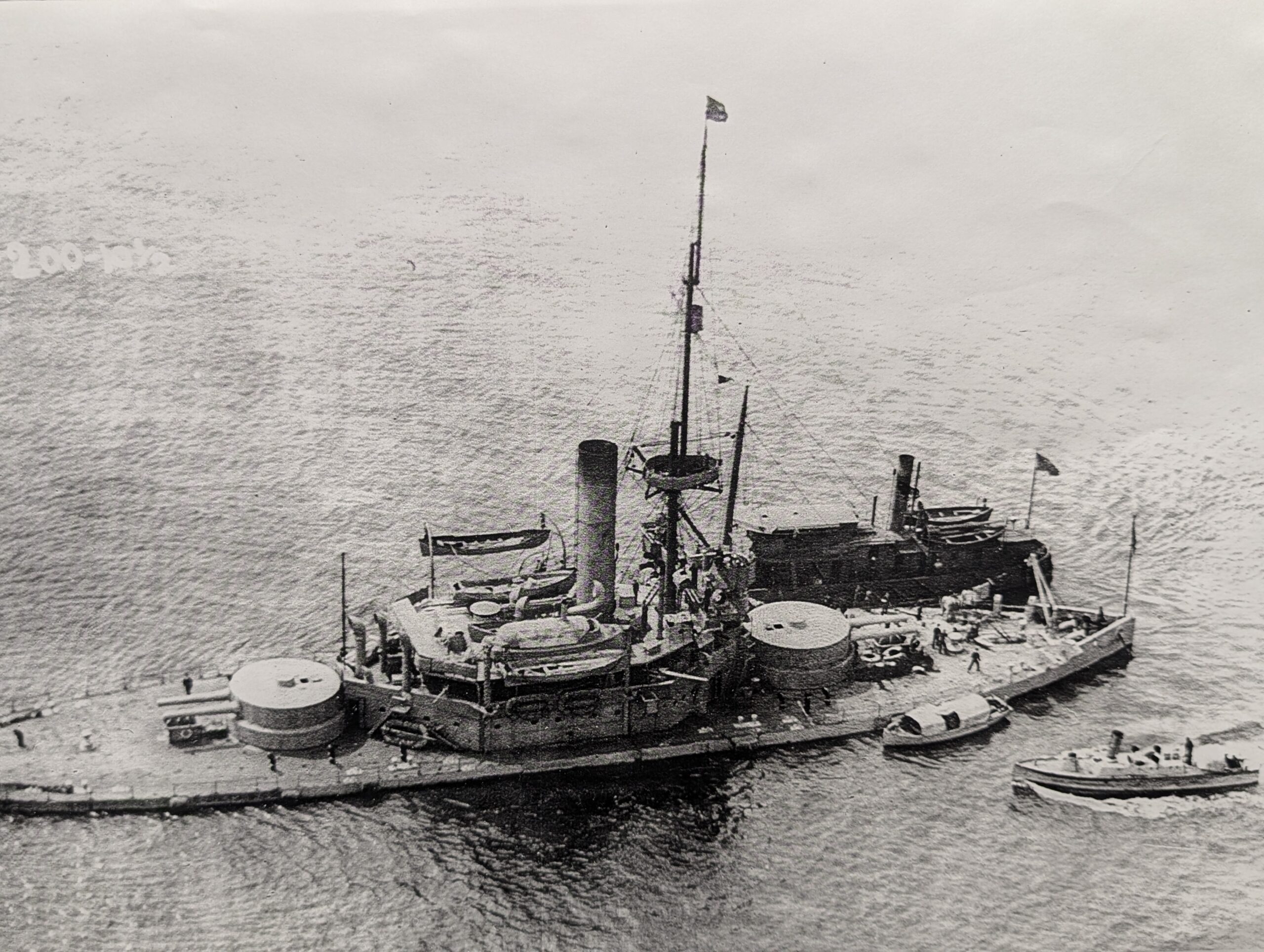
The design of these monitors prioritized firepower and protection over speed and seakeeping. Characterized by a very low freeboard, which presented a minimal target to enemy ships, their primary offensive power resided in large, heavily armored gun turrets. The U.S.S. Amphitrite (BM-2), commissioned on April 23, 1895, was a prime example. As seen in official Navy plans, her twin-screw, iron-hulled design was dominated by two turrets, each housing a pair of powerful 10-inch guns. These vessels were not intended to roam the high seas but to serve as formidable deterrents anchored at the nation’s maritime gateways.
The Fleet in Action
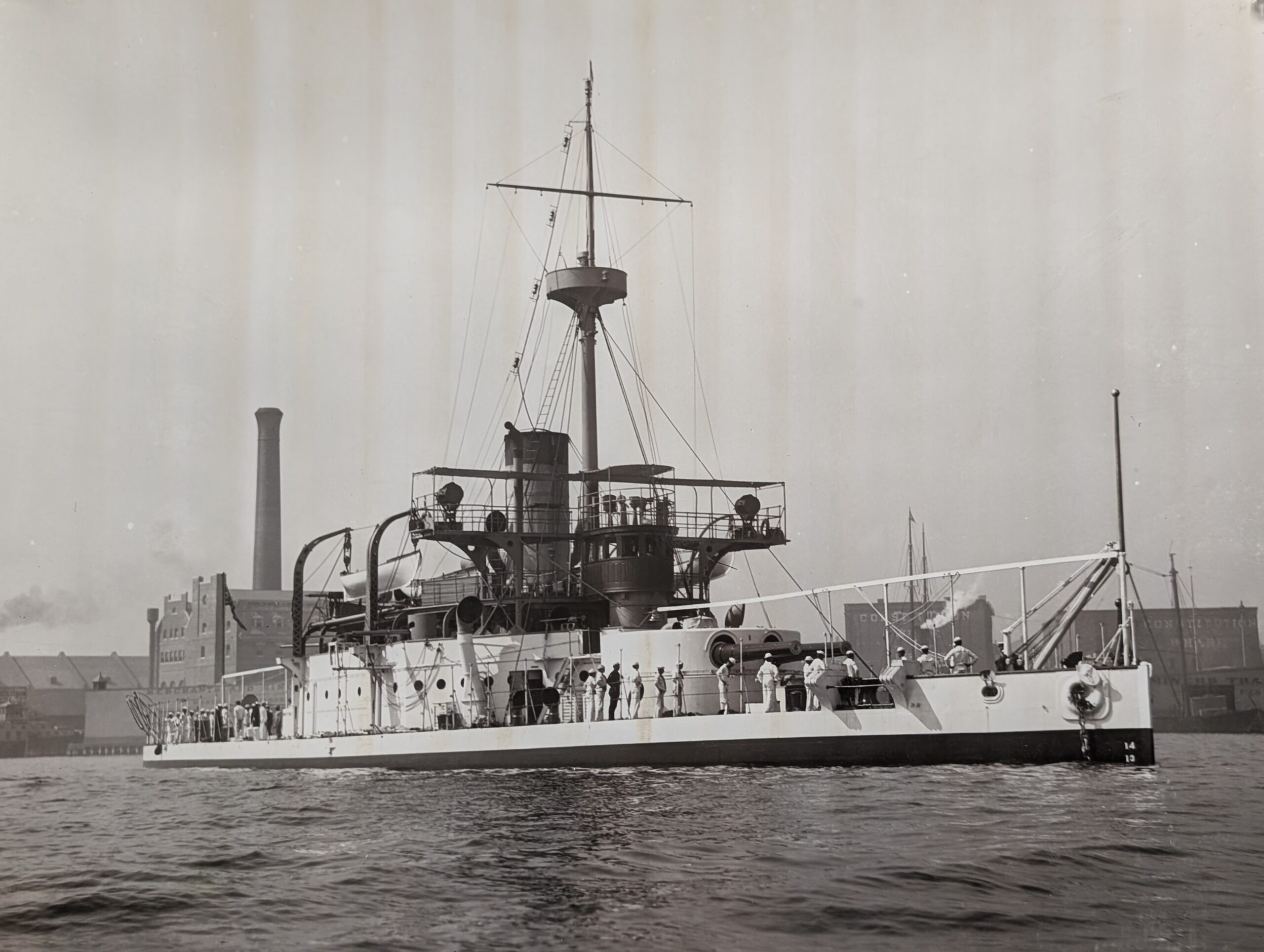
The Amphitrite-class monitors, including the U.S.S. Terror (BM-4) and U.S.S. Miantonomoh (BM-5), proved their worth during the Spanish-American War of 1898. While larger cruisers and battleships engaged the Spanish fleet abroad, the monitors formed a crucial part of the home defense squadron, ensuring key harbors like those in New England and along the Eastern Seaboard were secure from potential raids. Though they saw limited combat, their presence was a vital strategic asset, freeing up more mobile fleet elements for offensive operations.
A Ship’s Second, and Third, Act
While her sister ships were decommissioned, the story of the U.S.S. Amphitrite was far from over. Her robust construction allowed for a remarkably long and varied service life. During World War I, she served as a guard ship for New York City, a testament to her enduring utility in a defensive role.
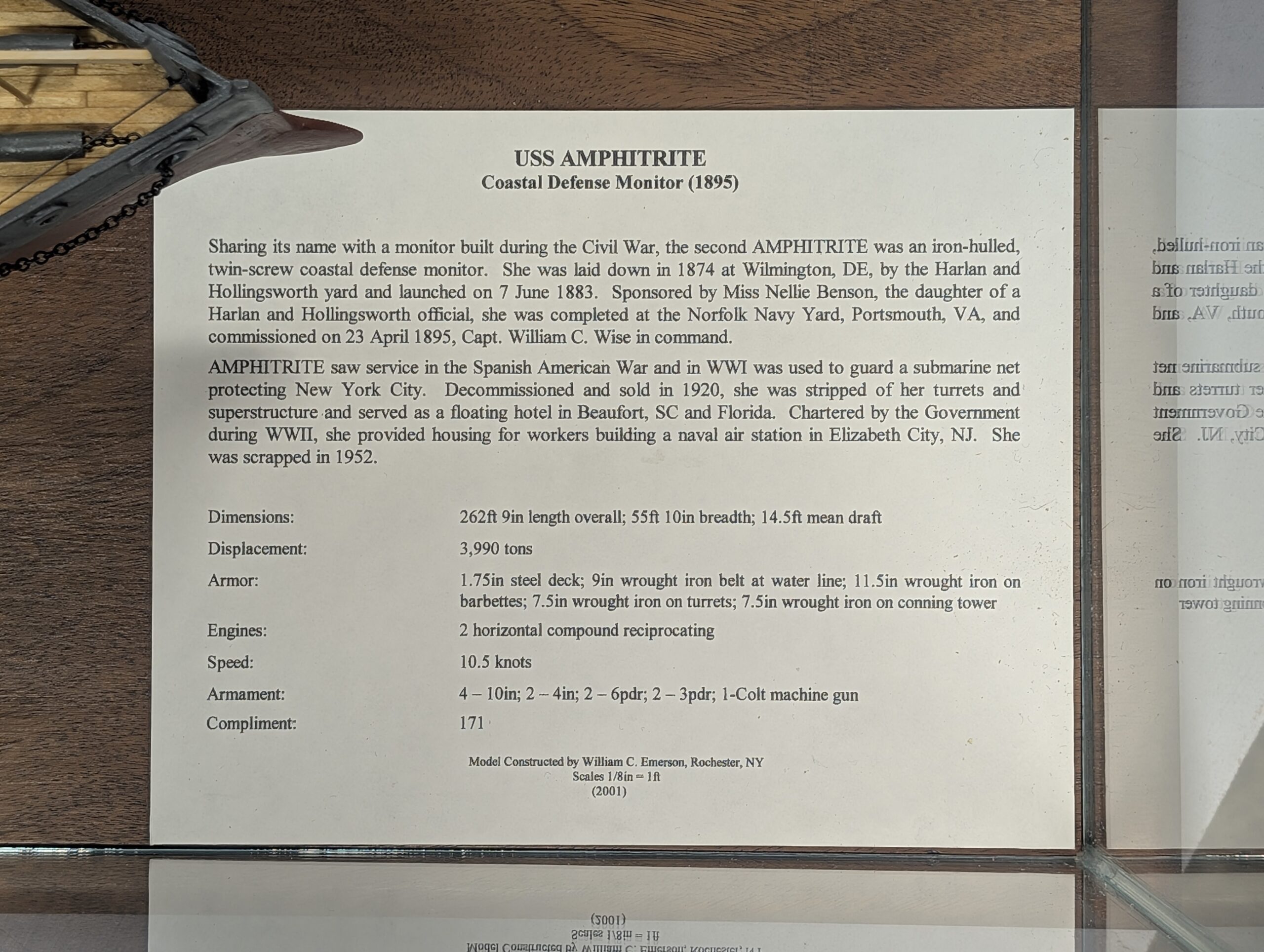
Following her naval decommissioning, the Amphitrite embarked on an even more unusual career. The former warship was converted into a floating hotel in Beaufort, South Carolina. Her final chapter of service came during World War II, when she was repurposed yet again, this time as a housing barge for shipyard workers in Elizabeth City, North Carolina—a role not unlike that of other converted vessels, such as the U.S. Navy barracks ship APL-7, which provided quarters for personnel during the war.
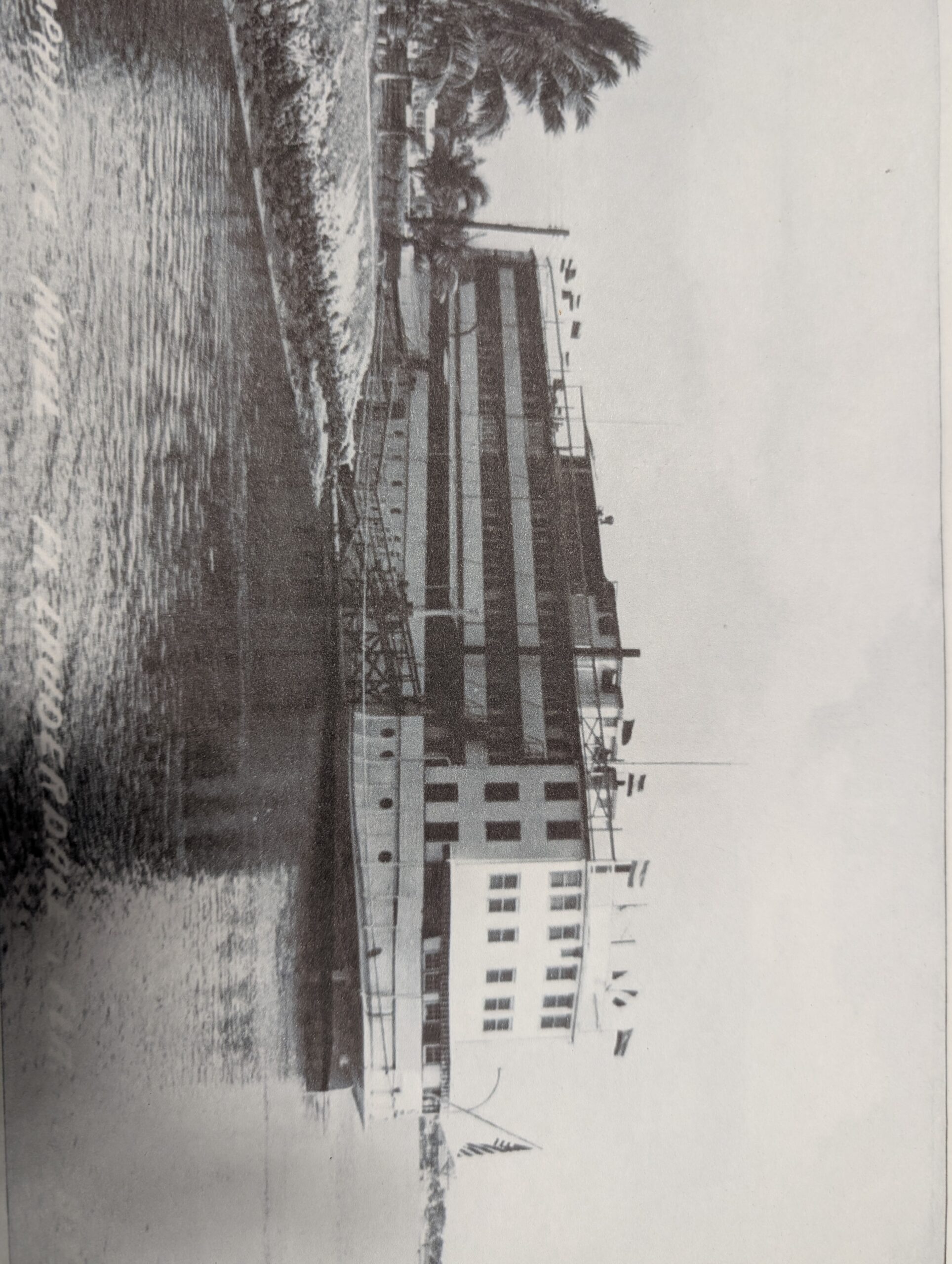
The ship that began its life as a state-of-the-art coastal defender in 1895 finally met its end in 1952 when it was sold for scrap. Its journey from a symbol of military might to a civilian hotel and finally a workers’ dormitory encapsulates a unique chapter in American maritime history. Today, its legacy is preserved in detailed models, such as the one built from match sticks by Bill Emerson, which allow us to appreciate the design and history of this long-serving vessel.