
The period between the American Civil War and the end of the Second World War marks one of the most rapid and profound transformations in military history. In less than a century, the nature of conflict evolved from uniformed armies maneuvering on terrestrial battlefields to a multi-domain struggle incorporating advanced naval power and the decisive application of air power. This evolution is mirrored in the materiel, uniforms, and equipment issued to service members, with each artifact telling a story of technological advancement and shifting tactical doctrine.
The Formalities of 19th Century Land Warfare
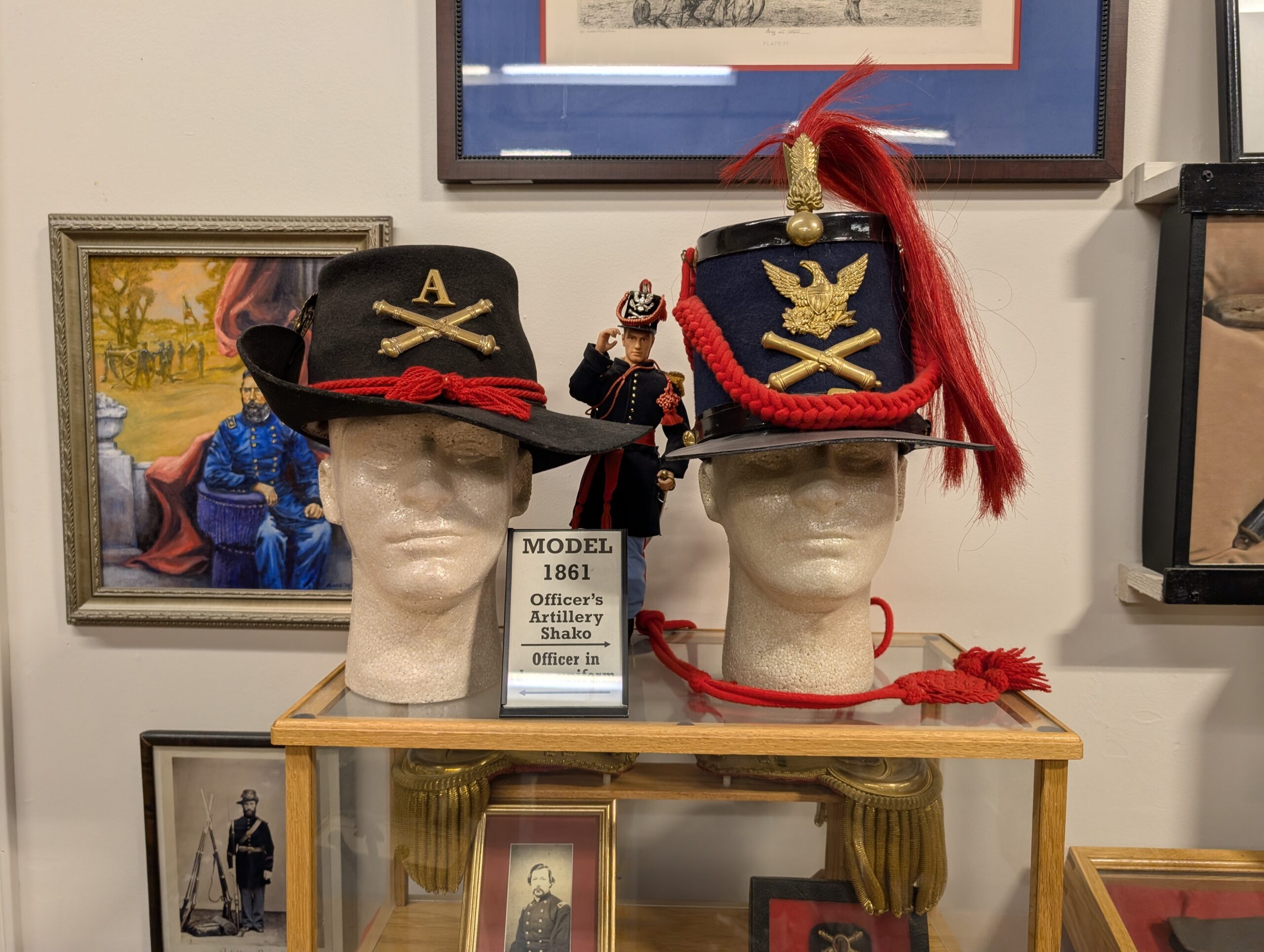
The headgear of a U.S. Army artillery officer during the Civil War reflects a service in transition. The Model 1861 Officer’s Artillery Shako, with its tall felt body, brass insignia, and prominent red plume, is a direct descendant of European military fashion, designed for battlefield grandeur and unit identification in the linear tactics of the era. Conversely, the more practical Hardee-style felt hat, adorned with the crossed cannon insignia of the artillery branch, represents an American adaptation to field conditions. While both were regulation, the contrast between the formal shako and the functional field hat illustrates the tension between traditional military ceremony and the harsh realities of industrial-scale conflict.
The Rise of Steel Navies
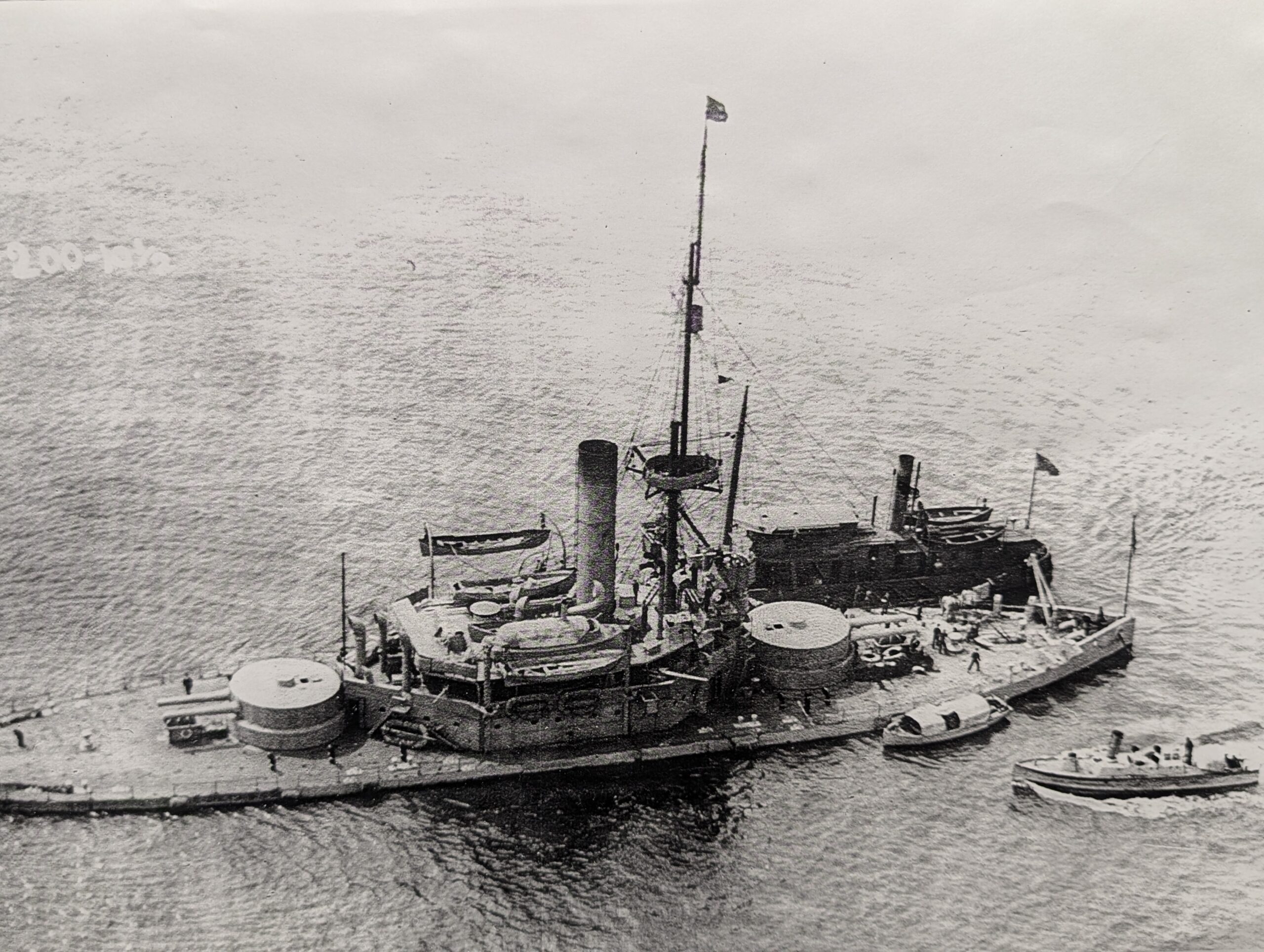
Following the Civil War, technological focus shifted heavily toward naval power. The USS Miantonomoh (BM-5), an Amphitrite-class coastal monitor commissioned in 1896, exemplifies this new era. Her design prioritized firepower and protection over speed and seaworthiness, featuring a very low freeboard to present a minimal target, and two powerful twin-gun turrets housing 10-inch rifles. Monitors like the Miantonomoh were floating fortresses, intended for harbor and coastal defense. Their service during the Spanish-American War represented the United States’ projection of industrial might and its growing role as a global naval power, a strategic shift built upon steel hulls and steam propulsion.
Mastery of the Third Dimension
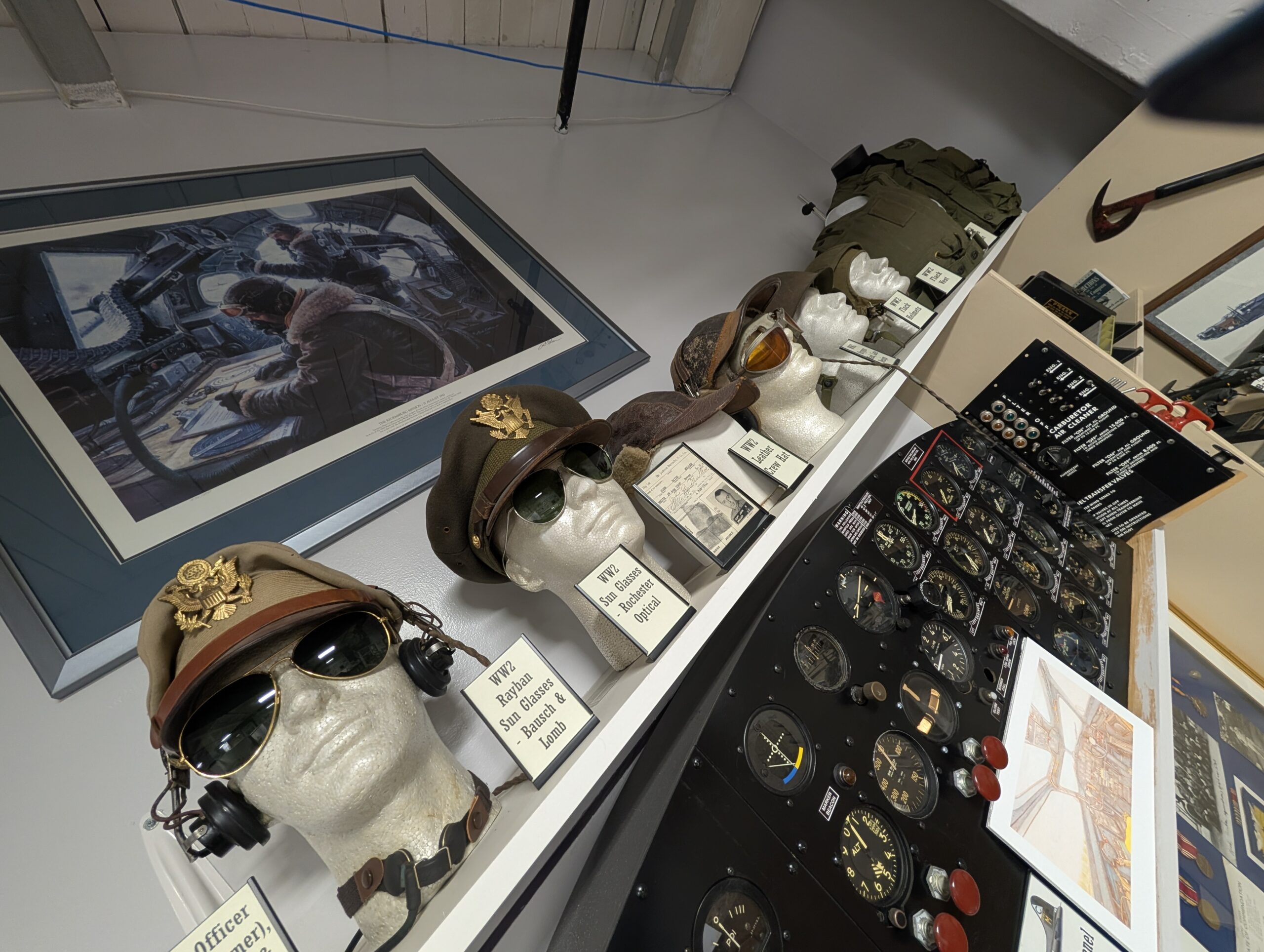
By World War II, a new domain of warfare had been established: the air. The equipment of the U.S. Army Air Forces (USAAF) aviator was a purpose-built system for survival and combat effectiveness in an unforgiving environment. The display showcases the evolution from the officer’s service cap to specialized flight helmets with integrated communications. Aviator sunglasses mitigated glare at high altitude, while heavy flak vests offered a measure of protection against anti-aircraft fire and enemy interceptors. This collection of gear—from headsets to instrument panels—underscores the complexity of aerial warfare and the emergence of the highly trained aviator as a central figure in modern military strategy.
From the plumed shako of the Civil War artilleryman to the steel hull of the coastal monitor and the flak vest of the World War II bomber crewman, these artifacts chart a clear trajectory. They document a period of unprecedented military innovation, where the battlefield expanded from the ground to the sea and sky, forever altering the scale and character of armed conflict.